

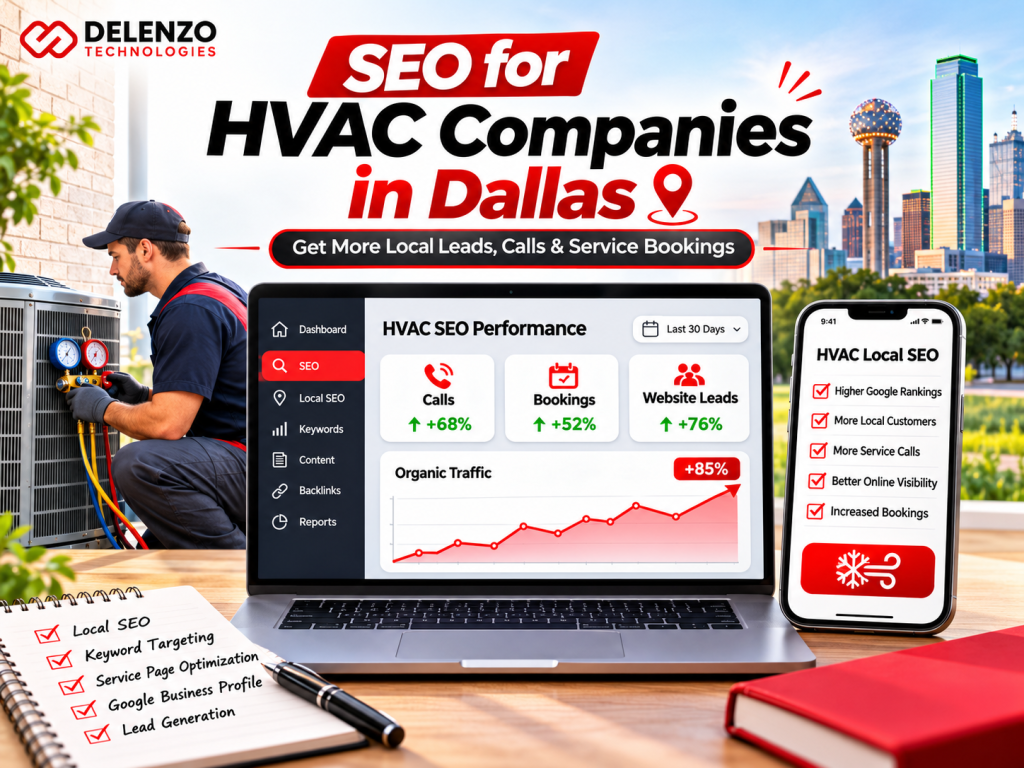
When an air conditioner stops working during a Dallas summer, homeowners rarely browse dozens of websites. They search for a nearby HVAC contractor who can respond quickly, explain the service, and make it easy to call. The same behavior applies to furnace repairs, seasonal tune-ups, and new system installations. If your business is difficult to find on Google Search or Maps, those opportunities may go to another company.
SEO for HVAC companies helps heating and cooling contractors connect with people already looking for their services. A useful strategy combines local search visibility, service-specific website pages, credible reviews, and a mobile experience built for calls and estimates.
Why Local SEO Matters for HVAC Contractors in Dallas
HVAC customers have different needs at different moments. Someone searching “emergency AC repair Dallas” may need help today, while a homeowner researching “heat pump installation cost” is still comparing options. Effective HVAC SEO in Dallas recognizes both types of intent and gives each visitor a relevant next step.
Local competition also extends beyond central Dallas. Customers may search from Oak Cliff, Lake Highlands, Richardson, Garland, Irving, or other communities where a contractor actually operates. A company can serve multiple areas, but its website should accurately describe its coverage instead of pretending to have offices everywhere.
1. Build an HVAC Keyword Strategy Around Customer Intent
Start with the work that generates revenue, not a list of high-volume phrases. Group keywords by the service a homeowner needs and the stage of their decision.
High-intent HVAC keywords
- Emergency searches: emergency AC repair Dallas, 24-hour HVAC repair, AC not cooling repair.
- Repair searches: air conditioner repair Dallas, furnace repair near me, heat pump troubleshooting.
- Installation searches: AC replacement Dallas, HVAC system installation, ductless mini-split installation.
- Maintenance searches: AC tune-up Dallas, HVAC maintenance plans, seasonal furnace inspection.
Use these examples only when they match services your company actually offers. A contractor without after-hours technicians should not advertise 24-hour availability just to win clicks.
Map each keyword group to a useful page. An AC repair page should explain symptoms, service areas, scheduling options, and what customers can expect. An installation page should address assessments, equipment choices, and the estimate process.
2. Improve Your Google Business Profile for Local Visibility
For many local searches, the Google Maps results appear before traditional website listings. That makes an accurate Google Business Profile an important part of local SEO for HVAC companies.
Confirm the business name, primary category, phone number, website, hours, and actual service area. Add relevant services, real photos of technicians or equipment, and current business information. Ask customers for honest reviews after completed jobs and respond professionally to feedback, including complaints.
Google explains that local results are influenced primarily by relevance, distance, and prominence. An optimized profile helps Google understand the business, but it cannot override a searcher’s physical location or guarantee a top-three Maps position.
If technicians travel to customers and the company does not welcome visitors at its office, follow Google’s service-area business rules and hide the address when required. Never create fake Dallas-area locations or stuff extra keywords into the registered business name.
3. Create Service Pages That Answer Real HVAC Questions
A strong HVAC website gives each main service its own clear destination. Useful pages might include AC repair, air conditioning installation, heating repair, preventive maintenance, and indoor air quality services.
For every page, explain what problems you solve, which systems you work on, how scheduling works, and why the service may be appropriate. Include original images, straightforward contact options, and relevant information about warranties or financing only when those offers genuinely exist.
Your headings should sound natural. “AC Repair Services in Dallas” tells users more than a vague heading such as “Our Amazing Solutions.” Add related terms like air conditioning diagnosis, refrigerant leaks, or cooling system repair only where the content explains them.
4. Build Honest Location Pages for Areas You Actually Serve
Location pages can help people understand availability in different parts of the Dallas area, especially when travel times, services, or scheduling differ. But changing only the city name across dozens of otherwise identical pages creates little value.
A useful Richardson or Irving page should contain genuinely relevant information: services available there, coverage boundaries, customer questions, local project examples with permission, and accurate contact details. Avoid fabricated testimonials, invented storefronts, or claims that technicians can arrive within a fixed time unless the company can support them.
5. Make Your HVAC Website Fast, Mobile-Friendly, and Easy to Contact
Many urgent repair searches happen on smartphones. Visitors need an obvious call button, readable service information, and a form that works without zooming or repeated errors.
Check page performance with PageSpeed Insights and Google Search Console. Google recommends good Core Web Vitals, including fast loading, responsive interactions, and stable layouts. Compress oversized photos, avoid intrusive pop-ups, and test forms on real phones.
Technical SEO also matters. Use descriptive title tags, one clear H1 per page, relevant internal links, an accurate XML sitemap, and indexable service pages. Fix broken links and redirect outdated URLs responsibly. These improvements make it easier for both visitors and search engines to use the site.
6. Earn Reviews, Local Mentions, and Trust Signals
For an HVAC contractor, credibility is not optional. Customers are inviting a technician into their home and may be making an expensive repair decision. Show real licensing or certification details where applicable, clearly state service policies, and avoid exaggerated claims.
Keep business contact information consistent across the website and legitimate local listings. Relevant memberships, supplier directories, community partnerships, and local news coverage can strengthen awareness. Do not purchase fake reviews or participate in manipulative link schemes.
After a job, a simple, neutral review request can help collect authentic customer feedback. Highlight reviews accurately, with permission when appropriate.
7. Publish Seasonal HVAC Content That Supports Service Pages
Educational articles can attract homeowners earlier in their journey. In Dallas, useful topics include warning signs of AC failure, what an AC tune-up includes, thermostat troubleshooting, and questions to ask before replacing a cooling system.
Each article should answer a specific question and link naturally to the most relevant service page. For example, a guide on weak airflow can discuss common causes, explain when professional diagnosis is needed, and direct interested readers to AC repair information.
Do not present complex electrical or refrigerant work as safe do-it-yourself tasks. Content should help readers recognize symptoms and make informed service decisions, not encourage hazardous repairs.
8. Track Qualified Leads, Not Just Search Rankings
Rankings and website visits are useful indicators, but they are not the final business outcome. Track phone calls, submitted forms, booked appointments, and completed jobs when your systems allow.
Set up Google Search Console to monitor queries and indexed pages. Use analytics events for form submissions and relevant call interactions.
Review which services and locations generate qualified inquiries. A page with modest traffic but several genuine installation requests may be more valuable than an article with many visitors who never contact the company.
HVAC SEO vs. Google Ads: Which Should Dallas Contractors Use?
SEO and Google Ads solve different timing problems. HVAC search engine optimization can help the website earn visibility over time, particularly for service and educational searches. Paid search can put an offer in front of potential customers sooner, but traffic stops when the campaign stops or the budget is exhausted.
For urgent repairs, a well-managed combination can make sense: paid campaigns for immediate demand and SEO for durable organic discoverability.
A Practical 90-Day HVAC SEO Plan
Days 1–30: Audit and correct. Review technical issues, verify the Google Business Profile, inspect competitors, and map high-intent HVAC keywords to existing pages. Fix contact information, broken forms, and obvious mobile problems first.
Days 31–60: Improve priority pages. Strengthen AC repair, installation, and maintenance pages with clearer explanations, titles, FAQs, and calls to action. Add genuinely useful location information and request authentic customer reviews.
Days 61–90: Expand and measure. Publish a small set of seasonal guides, pursue relevant local citations, and review search queries, calls, and form conversions. Use the evidence to decide which services need deeper content or better page design.
This is an implementation schedule, not a promise that rankings or leads will improve within 90 days. Competitive searches can require sustained work.
Common HVAC SEO Mistakes to Avoid
The most common problems are targeting keywords for services the company does not provide, publishing duplicate city pages, neglecting mobile calls, and judging success only by traffic.
Avoid guaranteed-ranking claims from agencies. No provider can buy a better organic or local ranking. Instead, ask how the proposed work will improve search relevance, user experience, reporting, and lead quality.
How Delenzo Technologies Can Support HVAC Lead Generation
A consistent strategy connects keyword research, local listings, technical improvements, content, and conversion tracking. Delenzo Technologies’ SEO services include local SEO optimization, on-page improvements, technical audits, and content strategy for businesses seeking better search visibility.
If your Dallas HVAC company wants to understand where valuable searches are being missed, start with a review of your service pages, Google Business Profile, and current lead sources.
Frequently Asked Questions About SEO for HVAC Companies
How long does HVAC SEO take to work?
There is no fixed timeline. Technical repairs and profile updates may be implemented quickly, while competitive organic rankings can take several months or longer. Existing website authority, competition, and consistent execution influence progress.
Should an HVAC contractor target Dallas or nearby cities?
Target Dallas and nearby communities where the business genuinely serves customers. Prioritize services and locations supported by real operations, and use original, useful content rather than creating near-identical pages for every suburb.
Is Google Business Profile enough for HVAC lead generation?
No. The profile helps customers find contact details and reviews, but a trustworthy website supports detailed service questions, estimates, and conversion tracking. Both should provide consistent information.
What are the best HVAC keywords for local leads?
Start with specific service-and-location combinations such as AC repair Dallas, furnace repair Dallas, and air conditioner installation Dallas. Choose keywords based on actual offerings and search intent, not volume alone.
Can a small HVAC company compete with larger contractors online?
Yes, particularly by developing clear service pages, accurate local information, strong customer experiences, and helpful content for a focused service area. Results depend on competition and execution, so sustainable progress matters more than quick promises.