


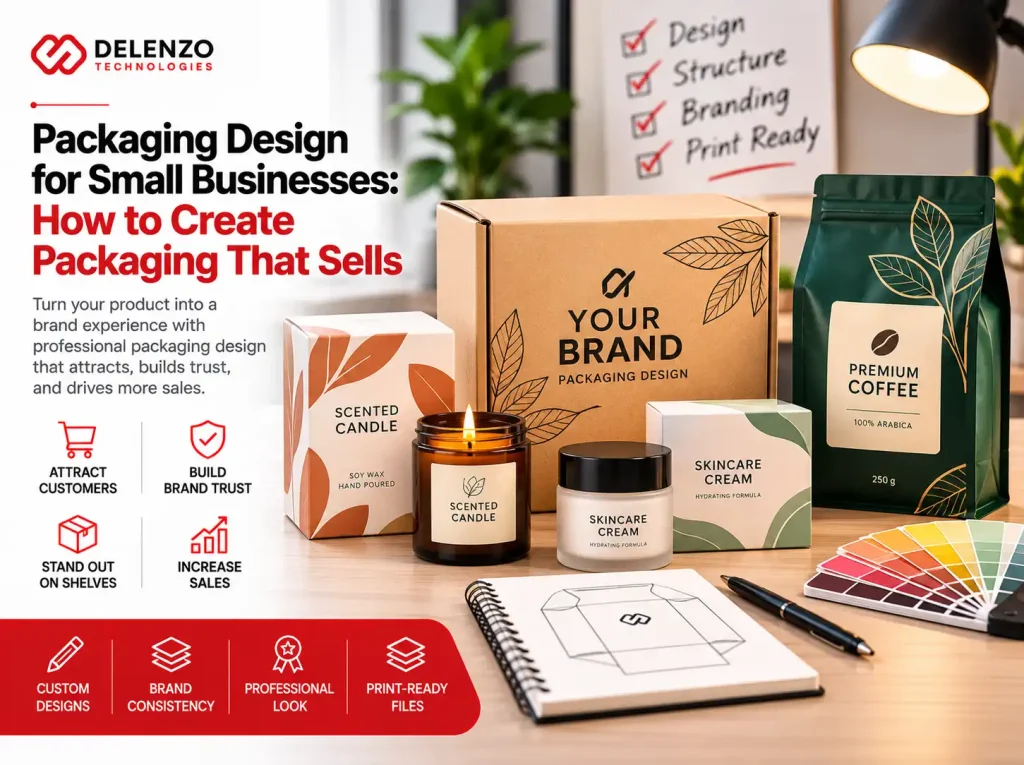
Your product might be excellent, but customers often judge it before they ever use it. Packaging is the first physical impression your brand makes—on a retail shelf, in a delivery box, or in a social media unboxing video.
For small businesses, packaging design is not just about looking attractive. It is a sales tool, a trust signal, and a functional requirement all at once. This guide explains what effective packaging design looks like, how the process works, what it costs, and how to avoid expensive printing mistakes.
Quick answer: Packaging that sells makes the product easy to understand, keeps branding consistent, protects the item, meets labeling requirements and arrives at the printer with accurate dielines, bleed and color settings.
Why Packaging Design Matters More Than You Think
Packaging works as a silent salesperson. On a crowded shelf, it has seconds to communicate what the product is, who it is for, and why it is worth buying.
Strong packaging also builds perceived value. Two products with similar quality can sell at very different prices simply because one looks more premium, more trustworthy, and more thoughtfully made.
For ecommerce brands, packaging shapes the unboxing experience. A well-designed mailer box, tissue wrap, insert card, or sticker can turn a routine delivery into a moment customers want to photograph and share. That experience can support your wider ecommerce marketing strategy.
Poor packaging does the opposite. It makes good products feel cheap, creates shipping damage, and forces expensive reprints. That is why packaging design should be treated as a business investment, not a last-minute design task.
Packaging Design vs. Label Design
Many small business owners use these terms interchangeably, but they are not the same.
Label design focuses on the information and branding printed on a specific surface—a bottle label, jar wrap, or product sticker. Packaging design covers the complete structure and experience: the box, pouch, bottle, tube, sleeve, insert, and outer carton.
A simple label may be enough for a small batch of homemade products. Custom packaging becomes necessary when you are entering retail, shipping fragile items, launching multiple SKUs, or competing on shelf presence.
Most growing brands eventually need both—a consistent label system and packaging that protects and presents the product properly.
Types of Packaging for Small Businesses
Understanding packaging categories helps you brief a designer accurately and budget realistically.
- Primary packaging: The container that directly holds the product, such as a bottle, jar, pouch, or tube.
- Secondary packaging: The box or outer wrap that holds the primary package, such as a rigid box or printed carton.
- Tertiary packaging: Shipping and bulk transport packaging used for storage and delivery.
- Ecommerce packaging: Mailer boxes, tissue paper, stickers, thank-you cards, and inserts designed for the unboxing experience.
Common formats for small businesses include rigid boxes, corrugated mailer boxes, stand-up pouches, kraft paper bags, tin containers, shrink sleeves, and printed labels. GS1 US also offers practical small-business packaging guidance for brands preparing products for retail.
What Makes Packaging Design Effective
Effective packaging balances creativity with clarity. It must look good, but it must also inform, protect, and sell.
Clear Brand Identity
Your logo, colors, typography, and visual style should be instantly recognizable. Packaging should feel like a natural extension of your website and social media, not a separate design universe. A professional brand and graphic design system keeps those touchpoints consistent.
Strong Shelf Presence
Contrast matters. If competitors use dark packaging, a clean light design may stand out. If the shelf is cluttered with busy graphics, minimal typography can cut through the noise.
Readable Hierarchy
Customers should immediately see the brand name, product type, variant, size, and key benefit. Everything else is secondary. If the product name is buried under decorative elements, the design has failed its main job.
Accurate Product Representation
Product imagery or illustration should match what is inside. Misleading visuals create returns, complaints, and damaged trust. Review every product image carefully, especially if you use an AI photo editor for product photos.
Regulatory Compliance
Ingredients, warnings, net weight, manufacturing details, barcodes, and certifications must be placed correctly. Missing information can delay retail approval or create legal problems. Requirements vary by product and location; food businesses selling in the United States should review the FDA Food Labeling Guide and get qualified compliance advice when needed.
Consistency Across Variants
If you sell five flavors or three sizes, the range should look like a family. Color coding, layout grids, and consistent typography help customers navigate the range quickly.
Practical Material Choices
Beautiful packaging that crushes in transit is a liability. Material, thickness, finish, and printing method should match the product and the delivery channel.
The Packaging Design Process Step by Step
A professional packaging project follows a structured process. Knowing the steps helps you evaluate quotes and avoid delays.
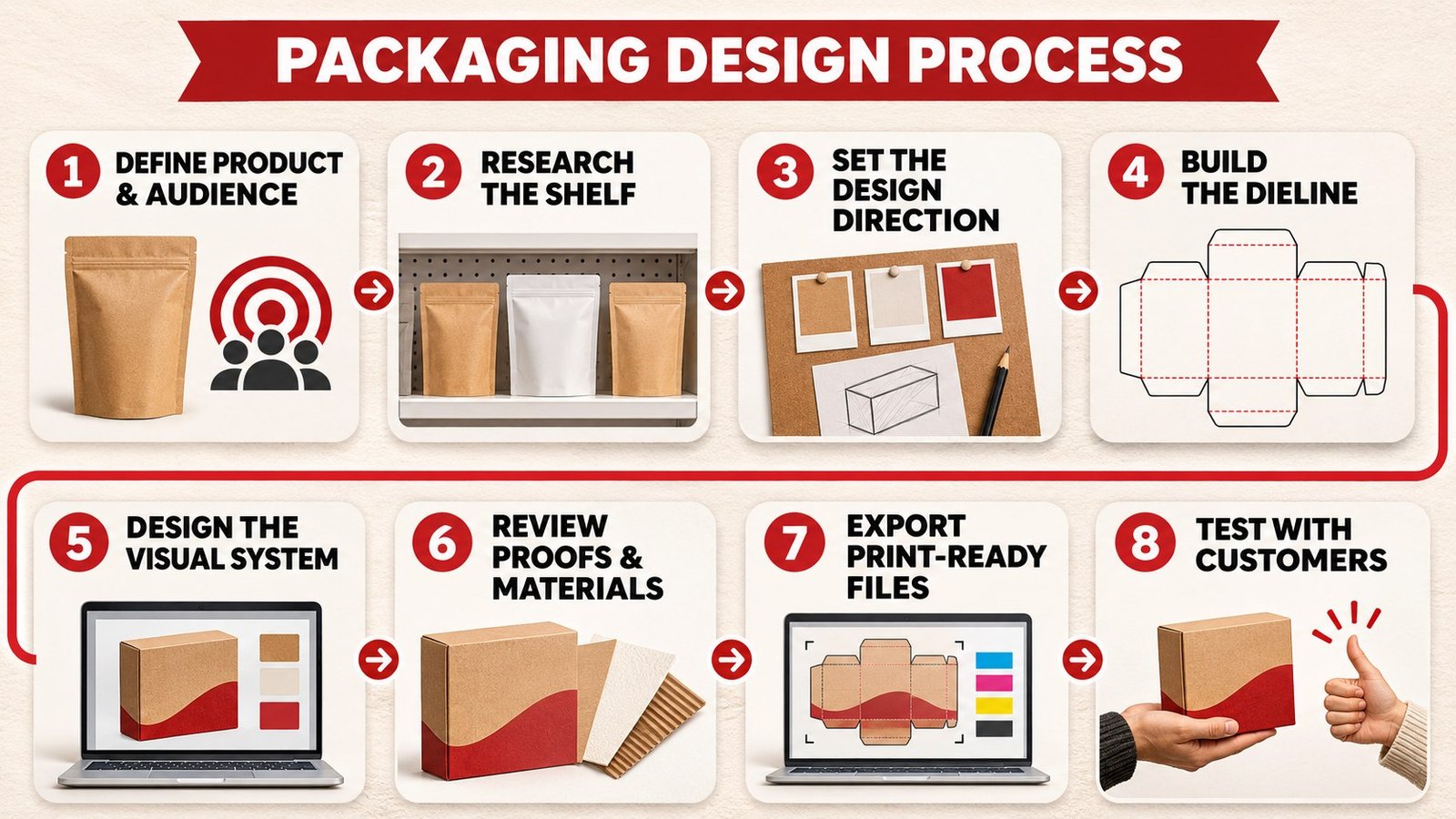
- Define the product, audience, and sales channel. Is the product sold in stores, online, or both? Who buys it, and what do they value?
- Research competitors and shelf context. Understand what the product will sit next to and how to stand out without confusing buyers.
- Create a moodboard and design direction. Agree on tone, color, typography, and visual style before designing.
- Develop structural dielines and dimensions. The dieline defines shape, folds, and cut lines—essential for accurate printing.
- Design the visual concept and label layout. Apply branding, hierarchy, imagery, and required information to the structure.
- Review print proofs and material samples. Check colors, finishes, and durability before full production.
- Finalize print-ready files. Deliver files with bleed, safe margins, CMYK profiles, and dielines.
- Test with real customers. Observe how people pick up, read, and react to the packaging before scaling.
Packaging Design Checklist Before Printing
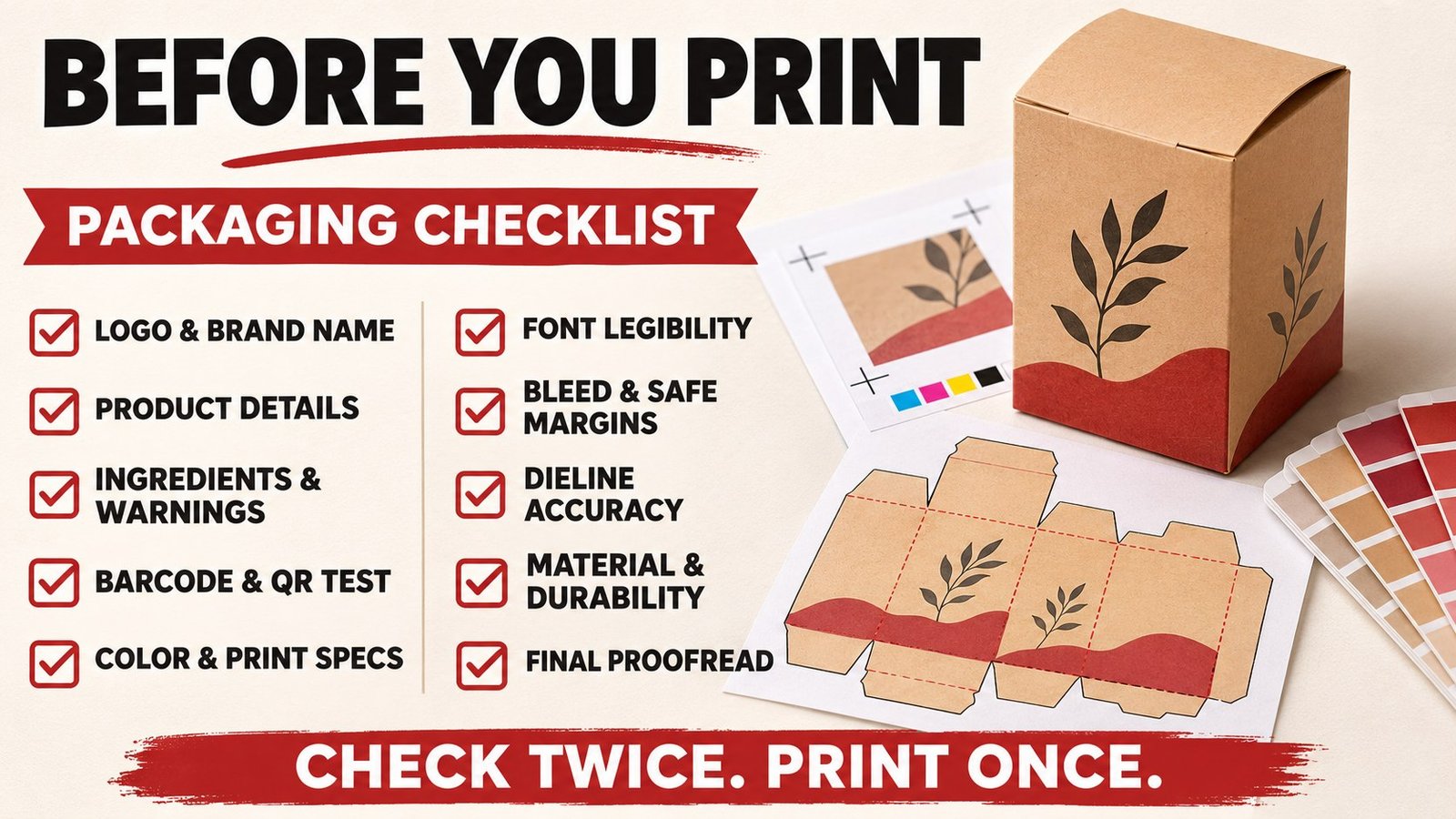
Use this checklist before approving any packaging file for production.
- Logo and brand name are correct and high-resolution.
- Product name, variant, weight, and quantity are accurate.
- Ingredients, warnings, and regulatory text are included.
- Barcode and QR code scan correctly. Follow GS1 barcode placement and printing guidelines.
- Colors match brand guidelines and print specifications.
- Fonts are legible at actual print size.
- Bleed, safe margins, and dieline are correct.
- Material and finish suit the product and shipping conditions.
- Packaging is tested for durability.
- Spelling and grammar are checked by a second person.
A single missed dieline or barcode error can waste an entire print run. This checklist is cheaper than a reprint.
Case Study: How Better Packaging Changed a Small Brand’s Shelf Appeal
Editorial note: This is an illustrative case study based on a typical small-business packaging project. Replace the details with verified client data before publishing.
A Lahore-based organic skincare brand approached Delenzo Technologies with a common problem. The products were well-reviewed, but sales in local retail stores were slow. The packaging used a generic white label with small typography, and on a shelf filled with brightly colored competitors, it disappeared.
The Delenzo team started with a shelf audit. We photographed the product in its actual retail environment and identified three issues: weak contrast, unclear product hierarchy, and inconsistent labeling across four SKUs.
The redesign introduced a consistent color system for each product category, a stronger brand mark, larger product names, and a clean ingredient panel. We also created a mailer box and insert card for online orders, so the unboxing experience matched the new in-store look.
Within the first three months after the redesign, the brand reported better shelf visibility, fewer customer questions about product differences, and a noticeable increase in repeat online orders. The biggest win was consistency: every product now looked like it belonged to the same brand.
This is the difference professional packaging design makes. It is not just a prettier label—it is a system that helps customers understand, trust, and choose your product.
How Much Does Packaging Design Cost?
Packaging design pricing varies based on scope, complexity, and the number of products.
| Cost factor | What it means |
|---|---|
| Simple label design | Lower cost, suitable for small batches and single-SKU products. |
| Custom packaging with dielines | Higher cost, required for retail and ecommerce packaging. |
| Multiple SKUs | Costs increase with each variant, but a system-based approach reduces per-product effort. |
| Illustration or custom photography | Adds cost but strengthens differentiation. |
| Print production | Separate from design fees and depends on material, quantity, and finish. |
The cheapest option is rarely the most economical. A low-cost design that fails on shelf or requires a reprint often costs more than doing it properly the first time.
Common Packaging Design Mistakes
- Too much text and visual clutter.
- Low-contrast colors that disappear on shelf.
- Ignoring bleed, safe zones, and dielines.
- Inconsistent design across product variants.
- Missing regulatory or ingredient information.
- Choosing materials that damage easily in shipping.
- Designing without checking actual print size.
- Skipping the unboxing experience for ecommerce orders.
Most of these mistakes are avoidable with a proper brief, a print-ready checklist, and a designer who understands production.
When to Hire a Packaging Designer
DIY design works for very small batches, simple labels, or early testing. Professional help becomes valuable when you are:
- Launching multiple SKUs at once.
- Entering retail stores or marketplaces.
- Shipping products that need durable, protective packaging.
- Preparing for a rebrand or product line expansion.
- Competing in a category where shelf presence drives sales.
A professional designer reduces reprint risk, ensures print-ready files, and builds a packaging system that can scale as your product range grows.
Why Choose Delenzo Technologies for Packaging Design
Delenzo Technologies is a full-service creative and digital agency working with businesses across Dallas, the USA, and Pakistan. Our graphic design team handles logo design, brand identity systems, social media creatives, marketing collateral, and custom packaging design.
Because we also provide web development, SEO, paid advertising, and social media marketing, we design packaging as part of a complete brand system—not as an isolated asset. Your packaging, website, ads, and social content can share the same colors, typography, and visual language.
If you are launching a product or refreshing an existing range, our team can handle everything from dieline development to print-ready files and ecommerce unboxing assets.
Conclusion
Great packaging does more than look good. It protects your product, communicates your brand, and helps customers choose you on a crowded shelf or a busy feed.
Before you print, review your design against the checklist in this guide. Confirm your hierarchy, contrast, dielines, regulatory text, and material choices. Then test the packaging with real customers before scaling production.
If you want packaging that performs in stores and online, Delenzo Technologies can help you design a system that looks consistent, prints correctly, and sells.
Ready to Upgrade Your Packaging?
Get a packaging system that looks consistent, protects the product and arrives at the printer ready for production.
FAQs About Packaging Design for Small Businesses
How Much Does Packaging Design Cost for a Small Business?
It depends on the number of products, dieline complexity, illustration needs, and revisions. Simple label design costs less than full custom packaging with structural design and mockups.
What File Format Should Packaging Designs Be Delivered In?
Print-ready PDF with bleed, dielines, and CMYK color profiles, plus editable source files such as AI or PSD.
Can I Use the Same Packaging Design for Multiple Products?
Yes, but keep a consistent system with clear variant differences such as color, flavor, size, or product name.
Do I Need a Dieline Before Designing Packaging?
Yes. A dieline defines the shape, folds, and cut lines, and it is essential for accurate print production.
How Long Does Packaging Design Take?
A simple label may take a few days, while custom packaging with structural design and multiple SKUs can take several weeks.
Should Packaging Design Match My Website and Social Media?
Yes. Consistent colors, fonts, and visual style build recognition and trust across every customer touchpoint.
