


Finding the best AI SEO tools in 2026 feels harder every year. New AI features launch constantly, and most reviews just repeat marketing copy. SEO is not what it was two years ago. Search results now mix classic blue links with AI Overviews, chat answers, and voice results. Ranking first in Google is only half the job now. Your content also needs to show up inside AI-generated answers, or it gets skipped entirely. Delenzo Technology tested every tool in this list firsthand, checked real pricing, and skipped the marketing fluff. Use this guide to pick the right tool fast, without wasting a free trial on the wrong one.
How AI Is Changing SEO in 2026
AI search has changed how people find answers online. Google AI Overviews, ChatGPT search, and Perplexity now sit next to normal search results. SEO teams need tools that handle both worlds. One side is classic ranking work like keywords and backlinks. The other side is generative search, where your brand needs to show up inside an AI-written answer. An LLM SEO strategy without the right software is guesswork. That is why modern SEO stacks include tools built for brand citations, not just blue links.
What Is the Best AI SEO Tool in 2026?
There is no single best SEO software 2026 for every business. The right top AI SEO platform depends on your goal. Semrush One fits teams that want one tool for everything. ChatFeatured fits teams chasing AI Overview visibility. Surfer SEO fits writers who need content scoring. Ahrefs fits link builders. Smaller businesses often do better with lighter, cheaper tools like RabbitSEO.
Best AI SEO Tools in 2026: Quick Comparison
This SEO software comparison gives you a fast snapshot before you read the full reviews.
| Tool | Best For | Core AI Feature | Ideal User |
| Semrush One | All-in-one SEO | AI visibility toolkit | Agencies, mid-size teams |
| Chat Featured | AI search visibility | LLM citation tracking | Brands chasing AI Overviews |
| Surfer SEO | Content optimization | Content scoring | Writers, content teams |
| Ahrefs | Backlinks | Link intelligence | Link builders |
| SE Ranking | Agency reporting | White-label reports | Agencies |
| Search Atlas | Automation | OTTO automation | Budget-conscious teams |
| Frase | Content briefs | SERP-based briefs | Content planners |
| Rankability | Content monitoring | Decay alerts | Publishers |
| Keywordly | Keyword clustering | Semantic clusters | Content strategists |
| Koala AI | Content generation | AI writing | Bloggers |
| SEOpital | Content at scale | Bulk automation | Agencies scaling content |
| Indexly | Indexing | Index monitoring | Technical SEOs |
| ChatGPT | Versatile assistant | General AI reasoning | Everyone |
| Perplexity | Cited research | Source citations | Researchers |
| Smartlead | Outreach | Email automation | Link builders |
| BuzzStream | Outreach CRM | Relationship tracking | PR and link teams |
| RabbitSEO | Small business SEO | Simplified AI fixes | Small businesses |
The best AI SEO tools for you depend on budget, team size, and whether AI search visibility is a priority.
What Are AI SEO Tools?
AI SEO Tools are software platforms that use machine learning to speed up SEO work. They study search data, content, and competitors far faster than a person can. Artificial intelligence SEO software goes beyond old-style keyword lists. It reads intent, spots patterns, and now tracks how brands appear inside AI-generated answers. This shift is part of wider SEO automation across the industry.
How Do AI SEO Tools Work?
AI SEO Tools follow a similar process behind the scenes. They crawl your site and competitor sites for SERP analysis. They study search volume and intent for keyword research. Machine learning SEO models then group related topics and suggest content gaps. Many tools now add semantic analysis, competitor analysis, content optimization, and full SEO automation tools workflows. The newer ones also run AI visibility monitoring across ChatGPT and Google AI Overviews.
Traditional SEO Tools vs AI SEO Tools
Here is a simple side-by-side view for people comparing old and new software.
| Aspect | Traditional SEO Software | AI SEO Tools |
| Keyword research | Manual filtering | AI-suggested clusters |
| Automation | Limited | High |
| Content optimization | Basic scoring | Semantic, intent-based |
| Predictive insights | Rare | Common |
| AI visibility tracking | Not available | Built into newer tools |
| Workflow automation | Manual steps | Automated pipelines |
Traditional software still works, but generative SEO tools save more time and catch more opportunities.
Why Businesses Need AI SEO Tools in 2026
Search competition keeps growing every year. AI-driven SEO software helps small teams keep up with bigger competitors. SEO automation benefits include faster audits, quicker content updates, and fewer missed opportunities. Search results change weekly, and manual tracking cannot keep pace anymore.
AI Overviews Are Changing Search Behavior
Google AI Overviews now answer many questions before a user clicks any link. Ranking first no longer guarantees a click the way it used to. Brands now need generative search optimization so their content gets pulled into these AI summaries. Visibility inside an AI answer is becoming just as valuable as a top ranking.
SEO Is Expanding Into AEO and GEO
SEO now includes two newer disciplines that work alongside classic ranking. Answer Engine Optimization focuses on getting picked as the direct answer. Generative Engine Optimization focuses on being cited inside AI-written responses. Both build on the same foundation as SEO: clear, well-structured, trustworthy content.
AI Search Visibility Is Becoming a New SEO KPI
Marketers now track more than rankings and clicks. ChatGPT visibility and Perplexity citations show how often your brand appears in AI answers. Brand mentions, prompt visibility, and share of voice are becoming standard reporting metrics. This shift is pushing more agencies to add AI tracking tools to their stack.
How Delenzo Technology Evaluated the Best AI SEO Tools
We did not just list tools by popularity. Delenzo Technology ran real SEO software testing across pricing tiers, features, and support quality. This work drew on our own SEO, GEO, and AEO services for real clients. This AI SEO evaluation looked at how each tool performs for real client work, not marketing claims.
Data Accuracy
Accurate data separates a useful tool from a guessing tool. We compared each platform’s keyword volume accuracy and ranking data against first-party sources. Google Search Console and GA4 confirmed the results where access allowed. Tools with consistent numbers scored higher in our evaluation.
AI Search Visibility Tracking
Not every tool tracks AI-generated answers yet. We checked whether each platform offers real ChatGPT tracking and AI Overviews tracking features. Tools without this capability were still useful, but scored lower on future-readiness.
Keyword & Competitor Research
Strong research depth matters for long-term strategy. We tested competitor analysis features and how well each tool surfaced true keyword gaps. Intent classification and opportunity discovery were weighted heavily in this section.
Content Optimization
Good content tools should guide writers without dictating robotic phrasing. We reviewed NLP SEO features, semantic keywords suggestions, and overall content score accuracy. Tools that balanced data with readability scored best.
Technical SEO Capabilities
Technical issues can quietly block rankings for months. We tested site audit depth, crawlability checks, indexing reports, and schema recommendations. Tools that flagged real issues, not just noise, ranked higher here.
Integrations & Workflow Compatibility
A great tool still fails if it does not fit your workflow. We checked WordPress SEO tools compatibility, GSC integration, and GA4 syncing for each platform. Agencies managing multiple client sites need this compatibility the most.
Pricing & Scalability
Budget matters as much as features for most buyers. We compared pricing across freelancers, small businesses, agencies, and enterprise teams. Affordable SEO tools and agency SEO software were reviewed separately since needs differ sharply. Software cost against hiring an agency is a fair question to ask. Our guide on SEO services cost and ROI breaks down that comparison.
17 Best AI SEO Tools for 2026
Below are the top SEO tools and AI optimization software platforms we tested. Rankings reflect real use cases, not hype. Pricing is listed as an estimate and should be confirmed on each provider’s site before you buy.
1. Semrush One: Best Overall AI SEO Platform
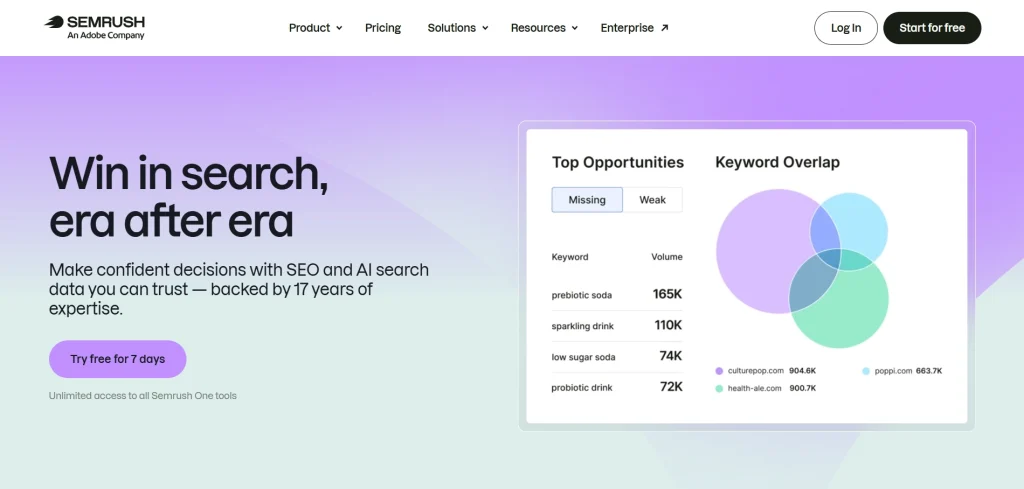
Semrush One is a full SEO suite that added an AI visibility toolkit on top of its classic tools. It handles keyword research, site audits, competitor tracking, and content optimization in one dashboard. The newer AI features track brand mentions across major AI search engines.
Best For
Agencies and mid-size businesses that want one platform instead of five separate tools.
Key Features
- Keyword and competitor research
- Site audit and technical SEO checks
- Content optimization scoring
- AI visibility and citation tracking
- Backlink analysis
- White-label reporting
Pros
- Covers almost every SEO need in one place
- Strong data accuracy compared to competitors
- Regular feature updates for AI search tracking
Cons
- Pricing rises quickly for larger teams
- Interface can feel busy for beginners
Pricing
Plans start in the affordable range and scale up for agencies. Confirm exact tiers on Semrush before purchase.
Who Should Use It?
Choose Semrush One if you want one login for SEO, content, and AI visibility work. It suits growing agencies and in-house teams that need depth over simplicity.
2. ChatFeatured: Best for AI Search Visibility & Execution
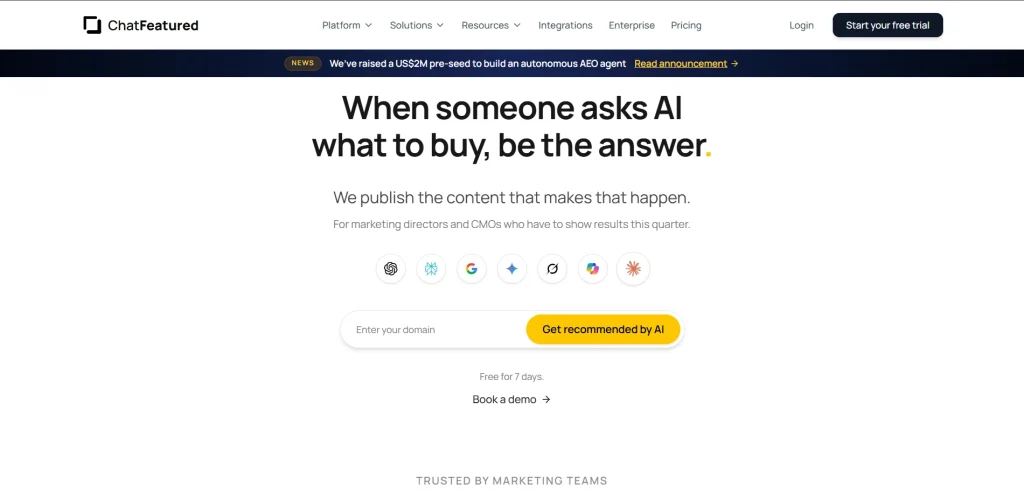
Chat Featured is built for one job: getting brands cited inside AI answers. This AI visibility platform tracks mentions across ChatGPT, Gemini, and Perplexity. It also suggests content changes to improve citation odds.
Best For
Brands that already rank well but want visibility inside AI-generated answers.
Key Features
- AI citation and mention tracking
- Prompt-level visibility reports
- Content recommendations for AI answers
- Competitor citation comparison
- Execution workflows for content teams
Pros
- Focused specifically on GEO SEO tool needs
- Clear reporting on brand share of voice in AI answers
- Useful for brands entering AI search strategy early
Cons
- Does not replace full SEO suites for technical audits
- Newer platform with a smaller feature history
Pricing
Pricing sits in the mid-range and depends on tracked prompt volume. Confirm current tiers directly with the provider.
Who Should Use It?
Pick ChatFeatured if AI search visibility is your priority this year. It works best alongside a traditional SEO tool, not instead of one.
3. Surfer SEO: Best for AI Content Optimization
Surfer SEO is a trusted content optimization tool built around its Content Editor. It scores drafts against top-ranking pages using NLP SEO signals. Writers get real-time suggestions while drafting.
Best For
Content teams and freelance writers who publish regularly.
Key Features
- Content Editor with live scoring
- SERP-based content briefs
- Semantic keyword suggestions
- Content audit for existing pages
- AI content detection checks
Pros
- Simple interface that writers actually enjoy using
- Strong correlation between score and ranking improvement
- Good for teams scaling content output
Cons
- Limited technical SEO features
- Best results need consistent, disciplined use
Pricing
Plans are budget friendly for solo writers and scale for agency teams. Check current pricing before committing.
Who Should Use It?
Choose Surfer SEO if content quality and consistency are your main bottleneck. It pairs well with a research tool like Ahrefs.
4. Ahrefs: Best for Backlink & Competitor Research
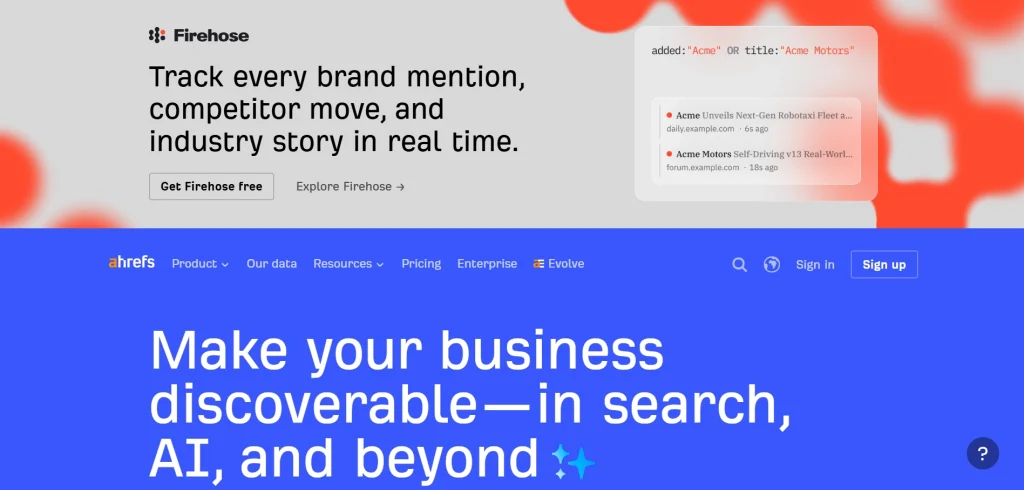
Ahrefs remains one of the most trusted names for backlink data. Its backlink checker and Site Explorer give deep insight into competitor link profiles. Competitor SEO research is one of its strongest features.
Best For
Link builders, agencies, and anyone needing reliable backlink data.
Key Features
- Site Explorer for backlink and traffic analysis
- Keywords Explorer for research
- Content Explorer for topic ideas
- Site audit for technical issues
- Growing AI visibility features
Pros
- Industry-leading backlink database
- Reliable data that agencies trust for client reporting
- Strong keyword difficulty scoring
Cons
- Pricing is higher than many competitors
- Free tools are limited compared to paid access
Pricing
Plans start moderate and increase for larger data limits. Confirm exact pricing on the Ahrefs site.
Who Should Use It?
Pick Ahrefs if backlink research and competitor analysis are central to your strategy. It is a strong second tool alongside a content platform.
5. SE Ranking: Best for Agencies & White-Label Reporting
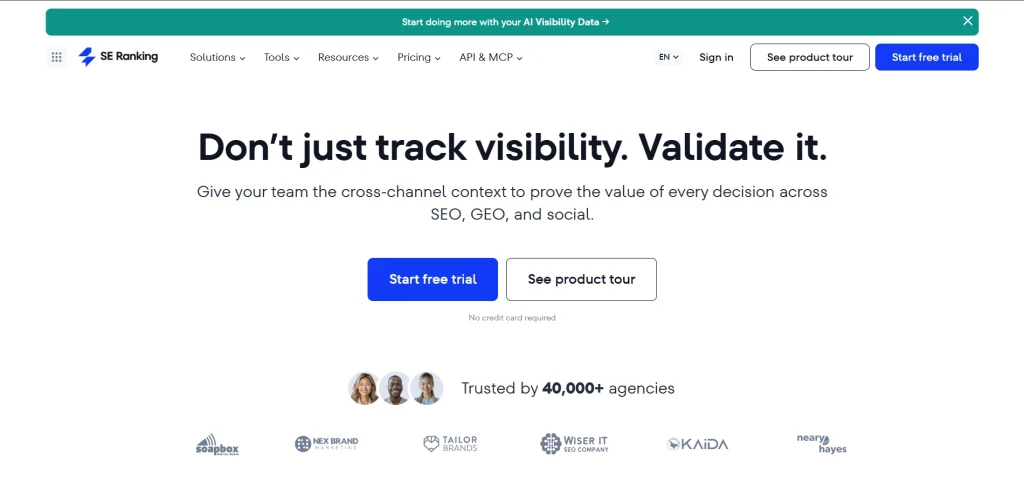
SE Ranking is a well-rounded SEO reporting tool built with agencies in mind. It covers rank tracking, audits, and agency SEO platform style white-label dashboards for client delivery.
Best For
Agencies managing multiple client accounts and reports.
Key Features
- Rank tracking across search engines
- White-label client reports
- Site audit tool
- On-page checker
- Backlink monitoring
Pros
- Affordable compared to bigger suites
- Clean white-label reporting for client-facing work
- Good balance of features for the price
Cons
- AI visibility features are still developing
- Data depth is lighter than Semrush or Ahrefs
Pricing
Plans are priced lower than most full suites, making it agency friendly. Confirm current tiers before signing up.
Who Should Use It?
Choose SE Ranking if you run an agency and need affordable, presentable client reports. It fits smaller and mid-size agencies well.
6. Search Atlas: Best AI-Powered Semrush/Ahrefs Alternative
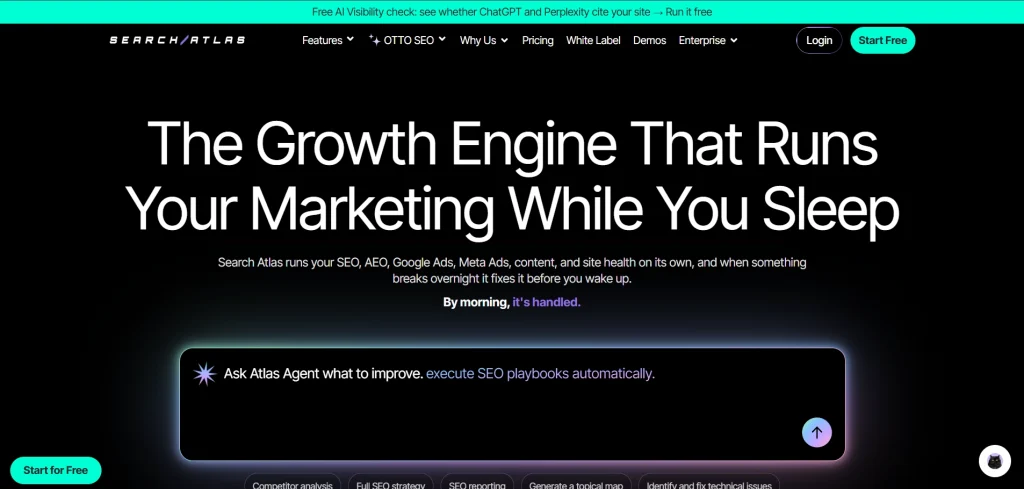
Search Atlas built its reputation on OTTO SEO, an automation layer that applies fixes directly to a site. It positions itself as an affordable SEO platform alternative to bigger suites.
Best For
Teams wanting automation without enterprise pricing.
Key Features
- OTTO automated on-page fixes
- Site audit and technical checks
- Content generation tools
- Keyword research
- Local SEO features
Pros
- Automation saves real implementation time
- Pricing is friendly for smaller budgets
- Good all-in-one value
Cons
- Automation still needs human review before publishing
- Interface has a learning curve at first
Pricing
Positioned as a lower-cost alternative to Semrush and Ahrefs. Confirm exact plans before purchase.
Who Should Use It?
Pick Search Atlas if you want automated fixes without a large software budget. It suits small and mid-size teams.
7. Frase: Best for SEO Content Briefs
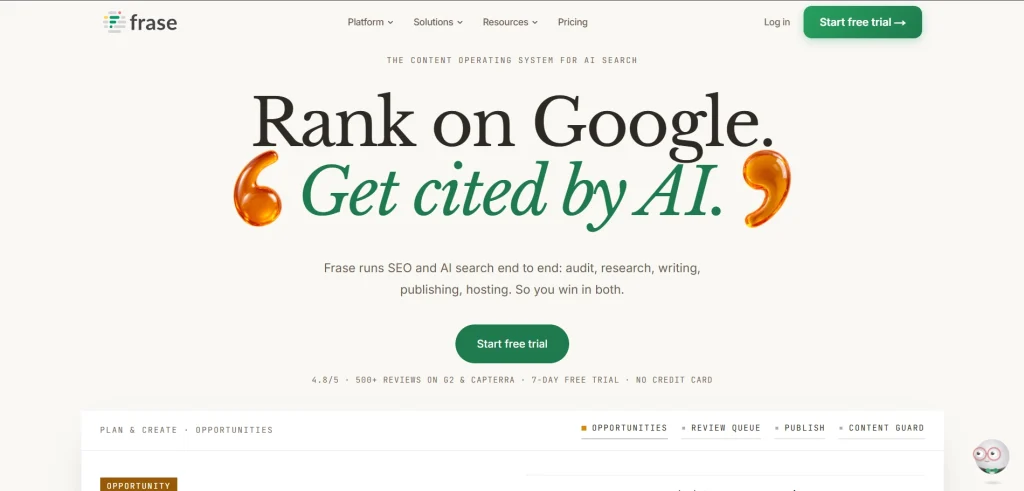
Frase builds fast, SERP research based content briefs for writers. It pulls competitor structure and questions automatically, cutting brief creation time significantly.
Best For
Content teams that outsource writing and need clear briefs.
Key Features
- Automated content briefs
- Question research from real searches
- Outline generation
- Content scoring
- Answer engine optimization support
Pros
- Saves hours on brief creation
- Good question research for FAQ sections
- Simple, writer-friendly interface
Cons
- Less useful for technical SEO tasks
- Smaller research database than bigger suites
Pricing
Entry plans are affordable for small teams and freelancers. Confirm current pricing on their site.
Who Should Use It?
Choose Frase if brief creation is slowing down your content team. It pairs well with Surfer or a similar optimization tool.
8. Rankability: Best for Content Quality Monitoring
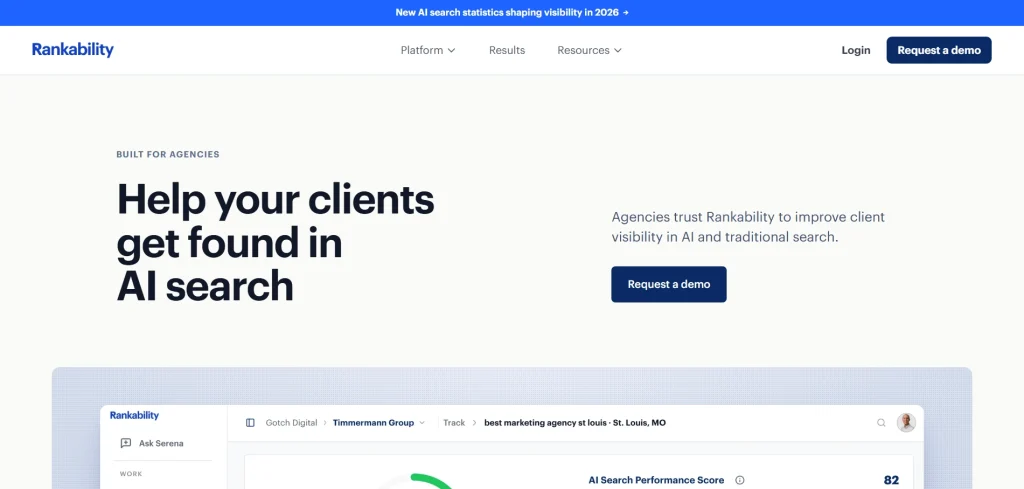
Rankability focuses on keeping existing content from slipping in rankings. Its content optimizer flags content monitoring issues before traffic drops significantly.
Best For
Publishers and businesses with large existing content libraries.
Key Features
- Content decay alerts
- On-page optimization scoring
- Keyword tracking
- Historical performance tracking
- Update prioritization
Pros
- Strong at catching declining pages early
- Helps prioritize which pages to update first
- Useful for teams with hundreds of published posts
Cons
- Less useful for brand-new sites with little content
- Smaller feature set outside content monitoring
Pricing
Mid-range pricing based on tracked page volume. Confirm plans directly with the provider.
Who Should Use It?
Pick Rankability if you already have a large content library losing traffic. It is less useful for brand-new blogs.
9. Keywordly: Best for Keyword Clustering
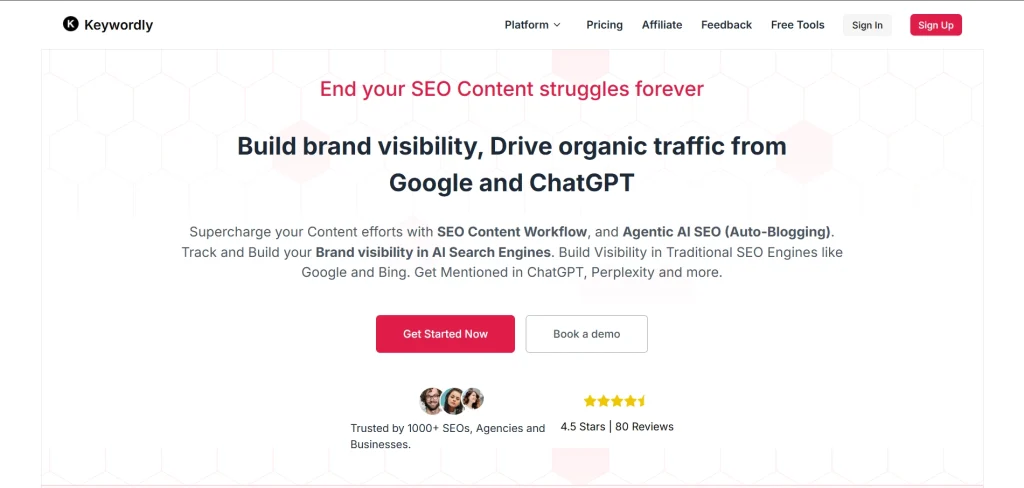
Keywordly groups related keywords into semantic keyword clusters automatically. This helps content planners avoid publishing pages that compete against each other.
Best For
Content strategists building large topic hubs.
Key Features
- Automated keyword clustering
- Topic cluster mapping
- Intent classification
- Content gap discovery
- Community-driven research data
Pros
- Saves time on manual keyword grouping
- Reduces internal keyword cannibalization
- Good for planning content calendars
Cons
- Fewer technical SEO features
- Best used alongside a broader SEO suite
Pricing
Budget friendly for small and mid-size content teams. Confirm current pricing before signing up.
Who Should Use It?
Choose Keywordly if you are planning large topic clusters and need fast grouping. It works well paired with a content optimization tool.
10. Koala AI: Best for SEO Content Generation
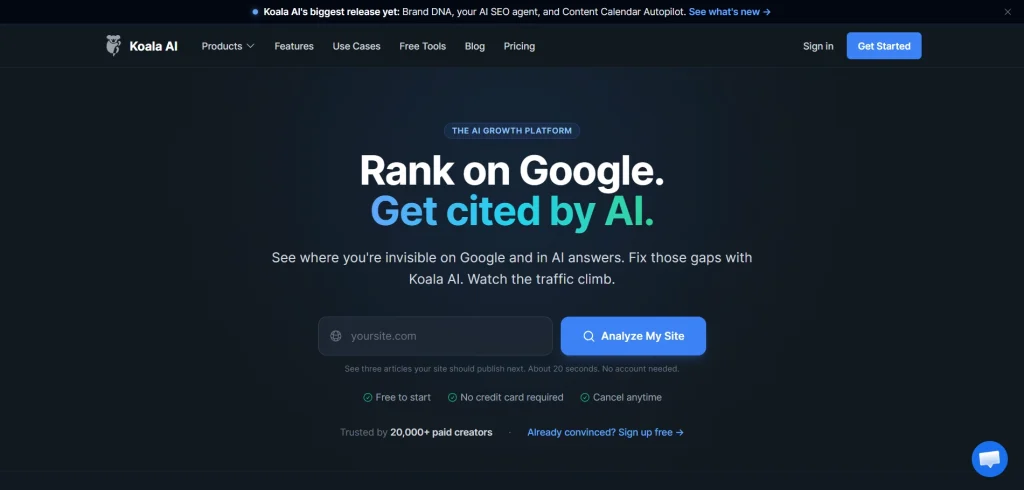
Koala AI is an AI writer for SEO focused on long-form article generation. It builds outlines automatically and lets writers customize tone and structure.
Best For
Bloggers and small teams needing fast first drafts.
Key Features
- Long-form article generation
- Automatic outline creation
- Tone and style customization
- Bulk content generation
- SEO-friendly formatting
Pros
- Fast first drafts save writing time
- Affordable for solo bloggers
- Good starting point for content structure
Cons
- Drafts still need human editing for quality
- Can sound generic without customization
Pricing
Entry-level pricing works well for individual bloggers. Confirm current plans before purchase.
Who Should Use It?
Pick Koala AI if you need fast drafts and plan to edit heavily. It is not a replacement for expert writing.
11. SEOpital: Best for Scaling SEO Content Production
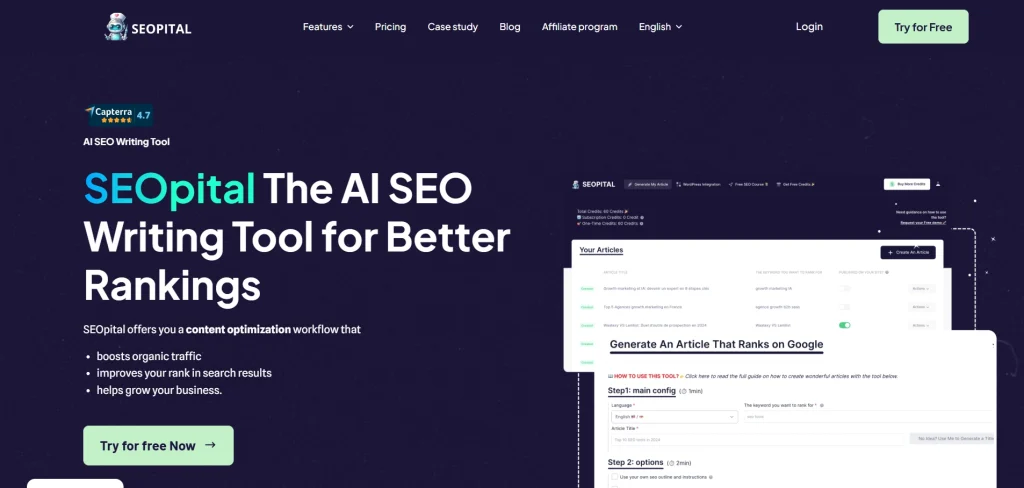
SEOpital focuses on AI content automation for teams publishing at high volume. Its bulk SEO content features connect directly to CMS platforms for faster publishing.
Best For
Agencies and businesses scaling content output across many pages.
Key Features
- Bulk content generation
- Direct CMS publishing
- Keyword-based content templates
- Internal linking suggestions
- Content workflow automation
Pros
- Cuts publishing time dramatically at scale
- Good for programmatic SEO projects
- CMS integration reduces manual uploads
Cons
- Quality control still needs a human editor
- Less ideal for small, low-volume blogs
Pricing
Pricing scales with content volume, so costs vary widely. Confirm current tiers with the provider.
Who Should Use It?
Choose SEOpital if you publish dozens of pages monthly and need automation. Smaller blogs may not need this scale.
12. Indexly: Best for Faster Indexing
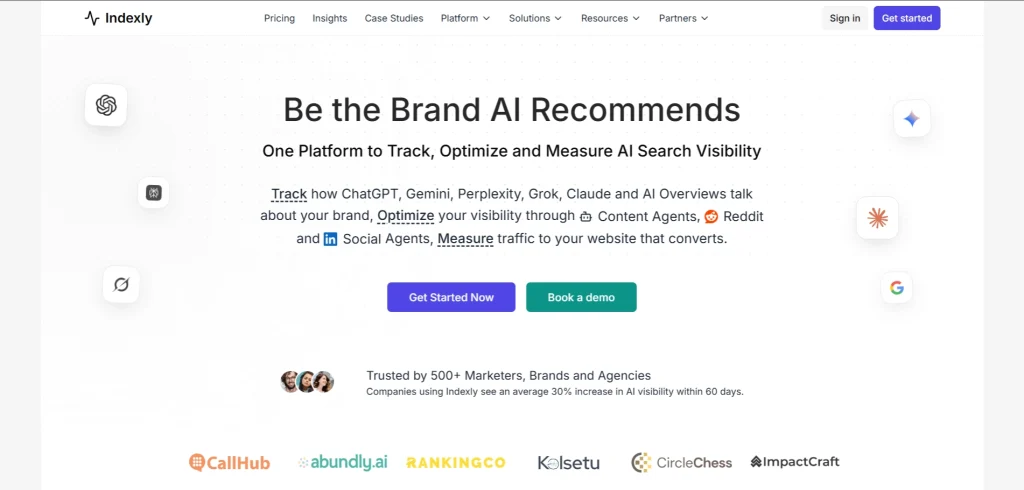
Indexly solves a common frustration: pages that take too long to appear in Google. This SEO indexing tool monitors and speeds up Google indexing for new content.
Best For
Technical SEOs managing large or frequently updated sites.
Key Features
- Indexing status monitoring
- Page submission automation
- Crawl discovery reports
- Sitemap health checks
- Alert notifications for indexing delays
Pros
- Solves a specific, common technical problem
- Simple setup and monitoring
- Useful for large sites with many new pages
Cons
- Narrow focus compared to full SEO suites
- Not useful alone without a broader strategy
Pricing
Low-cost pricing based on the number of URLs monitored. Confirm current plans before buying.
Who Should Use It?
Pick Indexly if new pages are taking too long to show up in search. Pair it with a full SEO suite for strategy.
13. ChatGPT: Best Versatile AI Assistant for SEO
ChatGPT is not a dedicated SEO tool, but it is one of the most used AI SEO assistant options today. Teams use it for research, ideation, and quick technical explanations.
Best For
Anyone needing a flexible assistant across SEO tasks.
Key Features
- Content ideation and outlining
- Schema markup drafting
- Content brief support
- Data explanation and analysis help
- Basic coding assistance for SEO fixes
Pros
- Extremely flexible across many tasks
- Free tier available for most users
- Fast for brainstorming and explanations
Cons
- No built-in ranking or keyword data
- Requires fact-checking for current information
Pricing
A free tier exists, with paid plans for advanced features. Confirm current pricing on OpenAI’s site.
Who Should Use It?
Choose ChatGPT as a support tool alongside dedicated SEO software. It should not replace real ranking data tools.
14. Perplexity: Best for SEO Research With Citations
Perplexity is an AI research tool that answers questions with linked sources. This makes it useful for fast, cited SEO research during content planning.
Best For
Researchers and writers who need quick, sourced answers.
Key Features
- Real-time web research
- Source citations for every answer
- Competitor research support
- Fact verification for claims
- Follow-up question threads
Pros
- Citations make fact-checking faster
- Good for current events and recent data
- Clean, simple interface
Cons
- Not built for keyword or ranking data
- Best used as a research aid, not a core SEO tool
Pricing
A free tier is available, with a paid plan for advanced use. Confirm pricing directly with the provider.
Who Should Use It?
Pick Perplexity when you need fast, sourced research for content. Combine it with a dedicated SEO platform for full strategy.
15. Smartlead: Best for Link-Building Outreach
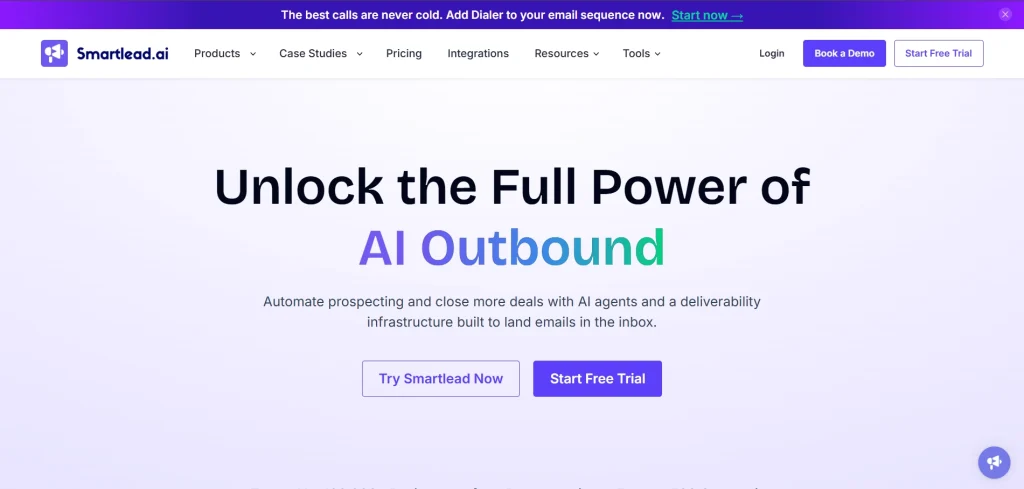
Smartlead automates cold outreach at scale for link building outreach campaigns. It handles sending, follow-ups, and inbox rotation for large cold email SEO campaigns.
Best For
Teams running high-volume backlink outreach.
Key Features
- Automated email sequences
- Inbox rotation and warmup
- Personalization at scale
- Reply detection and tracking
- Campaign analytics
Pros
- Saves major time on manual outreach
- Good deliverability tools built in
- Scales well for large campaigns
Cons
- Requires a real link-building strategy behind it
- Learning curve for full setup
Pricing
Pricing is based on email volume and inbox count. Confirm current tiers with the provider.
Who Should Use It?
Choose Smartlead if you run outreach at scale for backlinks. It needs good targeting to avoid wasted sends.
16. BuzzStream: Best for Link-Building Relationship Management
BuzzStream works like a link building CRM for outreach teams. It tracks every relationship, making blogger outreach organized instead of scattered across inboxes.
Best For
PR and link-building teams managing many contacts.
Key Features
- Contact and relationship tracking
- Outreach campaign management
- Email tracking and templates
- Link prospecting tools
- Reporting on outreach success
Pros
- Keeps large outreach lists organized
- Good history tracking for repeat contacts
- Useful for PR-style link building
Cons
- Not built for keyword or content research
- Best suited for teams doing manual, relationship-based outreach
Pricing
Mid-range pricing based on team size and contact volume. Confirm current plans before purchase.
Who Should Use It?
Pick BuzzStream if your link building relies on real relationships, not just cold email blasts.
17. RabbitSEO: Best Affordable AI SEO Tool for Small Businesses
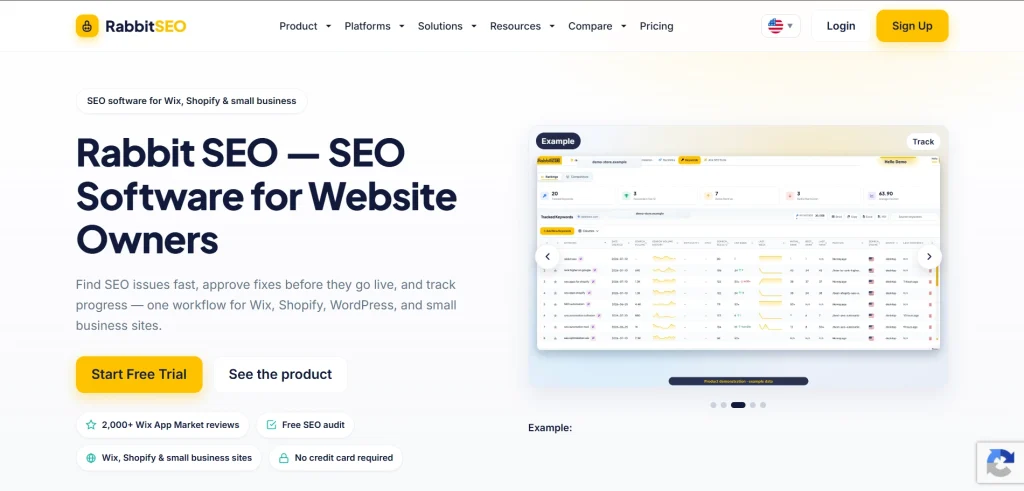
RabbitSEO is built for owners who cannot dedicate a full team to SEO. This small business SEO tool simplifies audits, fixes, and affordable AI SEO tracking into one dashboard.
Best For
Small businesses and solo owners managing their own SEO.
Key Features
- Simplified site audits
- Guided fix recommendations
- Basic AI visibility tracking
- Keyword tracking
- Beginner-friendly dashboard
Pros
- Very approachable for non-technical users
- Budget friendly compared to enterprise suites
- Clear, guided recommendations
Cons
- Less depth than enterprise-grade platforms
- Fewer advanced reporting options
Pricing
Priced specifically for small budgets, lower than most competitors. Confirm current plans on their site.
Who Should Use It?
Choose RabbitSEO if you are a small business owner handling SEO without a dedicated team.
Best AI SEO Tools by Use Case
This section breaks down SEO tools by use case. Skip straight to what matters most for your business.
Best AI SEO Tool for Agencies
Semrush One and SE Ranking lead this agency SEO software category. Both offer white-label reporting and multi-client dashboards built for scale.
Best AI SEO Tool for Small Businesses
RabbitSEO and Search Atlas are strong picks among affordable SEO tools. Both keep the setup simple while still covering the basics well. Software alone can still feel like too much to manage. See our breakdown of the best SEO companies for small businesses for the agency route instead.
Best AI SEO Tool for Content Optimization
Surfer, Frase, and Rankability lead this SEO content software category. Surfer suits fresh content, while Rankability protects content you already published.
Best AI SEO Tool for Keyword Research
Ahrefs and Keywordly are strong keyword discovery software options. Ahrefs offers depth, while Keywordly focuses on fast clustering.
Best AI SEO Tool for Technical SEO
Semrush One and Indexly lead this SEO audit software category. Semrush covers full audits, while Indexly solves indexing specifically.
Best AI SEO Tool for AI Search Visibility
ChatFeatured leads this category built around ChatGPT rank tracking and LLM visibility. This is the fastest-growing category in SEO software right now.
Best AI SEO Tool for Link Building
Ahrefs, Smartlead, and BuzzStream cover research, outreach automation, and relationship tracking together as a complete backlink tools stack.
Best Free AI SEO Tools
ChatGPT and Perplexity offer strong free SEO software options for research. Most dedicated free AI SEO platforms limit features until you upgrade.
AI SEO Tools Comparison: Which Tool Should You Choose?
Use this table to match a tool to your business size and goals fast.
| Aspect | Best Choice | Why It Fits |
| Solo freelancer | Frase or Koala AI | Low cost, simple setup |
| Small business | RabbitSEO | Guided, beginner friendly |
| Growing agency | SE Ranking | Affordable white-label reports |
| Enterprise team | Semrush One | Full feature depth |
| AI visibility focus | ChatFeatured | Built specifically for AI citations |
| Backlink-heavy strategy | Ahrefs | Strongest link data available |
This Semrush vs Ahrefs vs Surfer style comparison shows there is no single winner for every budget and goal.
Can AI SEO Tools Replace SEO Experts?
No, AI tools cannot fully replace AI vs SEO experts style strategic thinking. Software speeds up research, drafting, and reporting significantly. Strategy, judgment, brand voice, and original insight still require human expertise. The strongest results come from combining AI speed with expert oversight.
How to Use AI SEO Tools Effectively
A clear workflow gets far more value from any AI SEO strategy than random tool use. Follow these six steps to build repeatable SEO automation into your process. Our complete SEO guide covers the fundamentals behind these steps.
Step 1: Research Keywords and Search Intent
Start every project with real search intent analysis, not guessing. Identify what people actually want when they search a term. Group keywords by informational, commercial, and transactional intent before writing anything.
Step 2: Build Topic Clusters
Group related keywords into clusters to build topical authority over time. This approach supports semantic SEO by connecting related pages through internal links. Clusters also prevent pages from competing against each other.
Step 3: Analyze Competitors
Study top-ranking pages to find real SEO competitor gaps. Look at backlinks, content depth, and structure they are using. This step reveals opportunities your own content might be missing.
Step 4: Create and Optimize Content
Write with a human voice first, then apply semantic optimization suggestions. AI tools should guide structure and coverage, not replace your expertise. Our own content marketing services follow this same human-first, AI-assisted approach. The best content still sounds like it was written by a real person.
Step 5: Optimize for AI Search & AEO
Structure content to answer questions directly near the top of each section. Use clear entities, structured data, and authoritative sourcing throughout. This combination supports both GEO and AEO goals at once.
Step 6: Monitor Rankings and AI Visibility
Track both classic Google rankings and AI mentions together. LLM tracking and normal SEO reporting should live in the same dashboard when possible. Regular monitoring helps you catch drops before they become serious problems.
AI SEO vs AEO vs GEO: What’s the Difference?
These three terms overlap, but each targets a different search experience.
| Aspect | SEO | AEO | GEO |
| Goal | Rank in search results | Get selected as the direct answer | Get cited inside AI-generated answers |
| Channel | Google, Bing | Voice search, featured snippets | ChatGPT, Gemini, AI Overviews |
| Method | Keywords, backlinks, technical fixes | Clear, direct answers to questions | Structured, authoritative, well-sourced content |
| Success metric | Rankings and traffic | Snippet and voice answer wins | Brand citations and mentions |
Generative Engine Optimization and Answer Engine Optimization now work alongside traditional SEO rather than replacing it.
Common Mistakes When Using AI SEO Tools
Even good software cannot fix a poor process. Avoid these frequent AI content mistakes and SEO automation problems.
- Blindly following a content score without reading for quality
- Publishing AI-generated drafts without human editing
- Repeating keywords unnaturally to chase a score
- Trusting estimated metrics without checking first-party data
- Ignoring real brand expertise in favor of generic AI suggestions
The Future of AI SEO Tools
Expect future SEO trends 2026 to push toward multi-engine optimization across Google and AI platforms together. The AI search future likely includes more LLM citation tracking as a standard feature. Agentic workflows will handle more routine tasks automatically. Integrated SEO, AEO, and GEO platforms will replace today’s separate tools over time.
Why Work With Delenzo Technology for AI-Driven SEO?
Software alone cannot build a winning strategy. Delenzo Technology combines human-led SEO strategy with the right AI SEO services for each client. Our Dallas-based team handles technical SEO, content optimization, and AEO and GEO work together. We test the same tools covered in this guide, then apply the ones that fit your goals. Clients across the USA rely on us to translate AI hype into real, measurable results.
Final Verdict: What Is the Best AI SEO Tool for You?
The best AI SEO tools for you depend on your business size, budget, and goals. Choose Semrush One for full-suite depth, ChatFeatured for AI visibility, or RabbitSEO for simple small business needs. Combine two or three tools rather than searching for one perfect platform. Pair any tool with expert strategy for the best long-term results.
Improve Your SEO & AI Search Visibility With Delenzo Technology
It is time to move past guesswork and confusing software comparisons. Delenzo Technology, based in Dallas, USA, builds complete SEO agency strategies around your goals. Our team handles GEO services and AEO services alongside traditional SEO work. We help you get found on Google and cited inside AI search answers. Contact Delenzo Technology today for a free SEO and AI visibility audit.
Frequently Asked Questions
Semrush One is widely seen as the top SEO platform for 2026 because of its all-in-one design. It covers research, audits, and AI visibility tracking together for most growing businesses.
Surfer SEO works as the top AI SEO writer support tool for content teams needing real-time scoring. Koala AI suits fast first drafts that still need human editing before publishing.
Yes, ChatGPT supports a solid ChatGPT SEO strategy by helping with research, content ideas, and schema drafting. It lacks real ranking data, so pair it with a dedicated SEO tool.
RabbitSEO is the best affordable AI SEO option for small businesses managing SEO without a team. It simplifies audits and fixes into one beginner friendly dashboard at a lower cost.
Yes, AI SEO tools offer strong SEO tool ROI by saving research and audit time each week. The investment pays off fastest for businesses publishing content or tracking rankings regularly.
Yes, AI-generated SEO content can rank on Google if it is accurate, edited, and genuinely helpful. Google ranks content based on quality and usefulness, not on how it was written.
An AI visibility tool tracks how often your brand appears in AI answers, similar to ChatGPT brand tracking. It monitors citations, mentions, and share of voice across major AI search engines.
SEO focuses on ranking pages in traditional search results like Google. Generative Engine Optimization focuses on getting your brand cited inside real AI-generated answers from tools like ChatGPT and Gemini.
No, most AI SEO tools work alongside Semrush or Ahrefs rather than replacing them. This AI tools vs traditional SEO tools comparison shows each covers different strengths businesses still need.