

You opened a business. You’re juggling sales, operations, customer support, and maybe payroll. The last thing you have bandwidth for is wrestling with Canva templates at midnight, trying to make your logo look “right.”
Good design isn’t decoration. It’s the first signal customers use to decide whether you’re worth trusting. This guide breaks down what graphic design services for small business owners cover, what they cost in 2026, how to pick the right type of provider, and what real businesses get wrong before they pay anyone a dollar.
What graphic design services actually cover
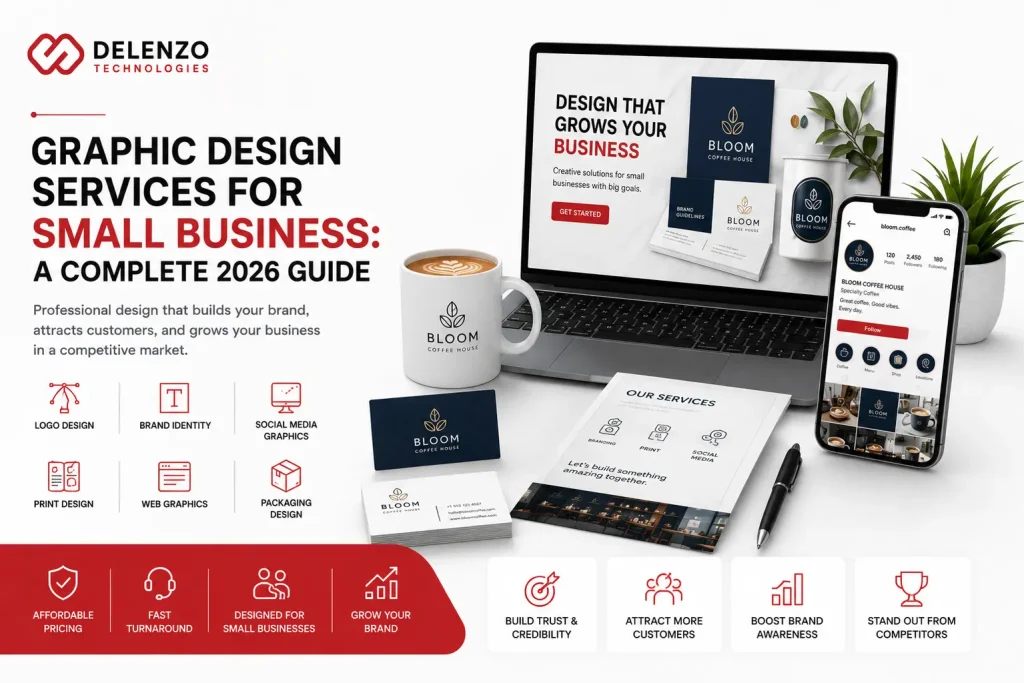
Small business graphic design services include every visual asset a company uses to communicate. That covers logos, color systems, fonts, social media graphics, websites, packaging, ads, brochures, business cards, presentation decks, and signage. The work splits into two buckets. Brand foundation pieces that rarely change, and ongoing marketing assets that keep your business visible week after week.
Most owners think of design as one-off projects. The smart ones treat it as a system that compounds over time.
Logo and brand identity
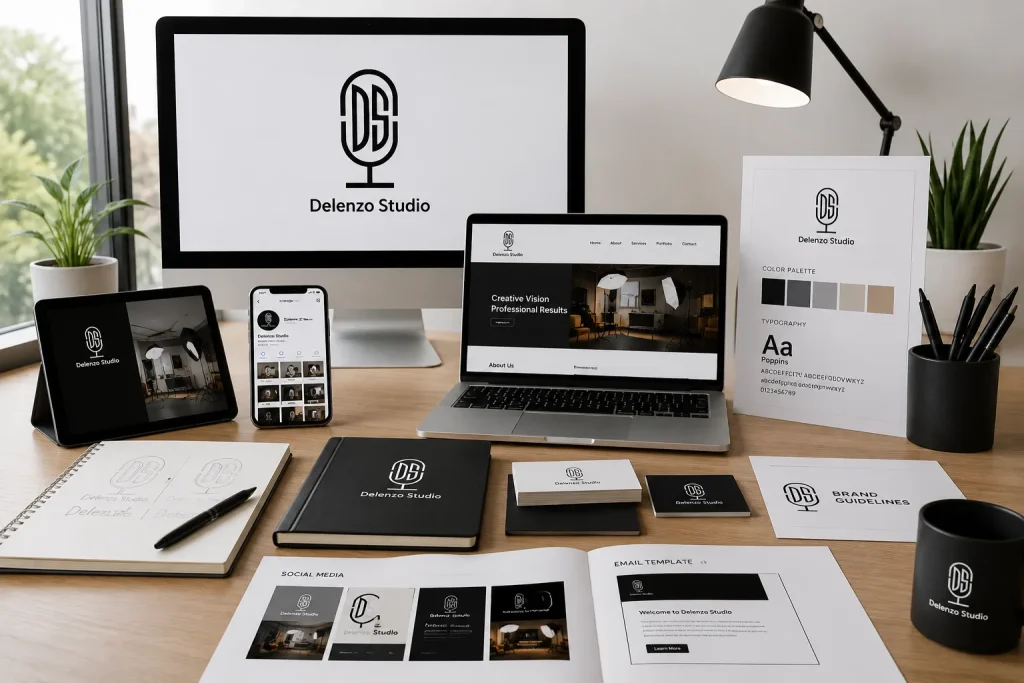
A logo design is the symbol customers spot first. Brand identity design is everything around it: the color palette, typography, photography style, voice, and how all of it shows up across touchpoints.
A logo without a system around it ages fast. You’ll end up with mismatched social posts, off-brand emails, and a website that looks like five different companies stapled together. A proper brand identity locks down the rules so anyone on your team, or any contractor, produces work that looks consistent.
Most small businesses underspend here at first. They pay for it later in expensive rebrands or lost customer recognition.
Social media design
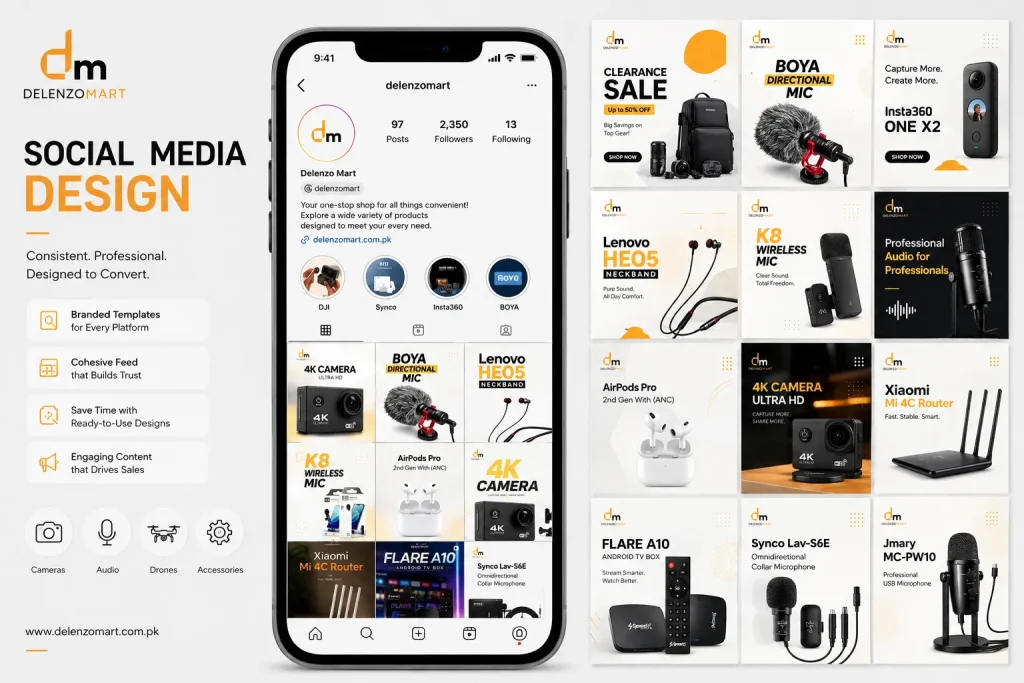
Your feed is the storefront for half your customers. Social media graphic design services cover templates for posts, carousels, story frames, ad creatives, video thumbnails, and reels covers.
The goal isn’t one viral post. It’s a feed that looks coherent when someone scrolls 20 of them in 10 seconds. A consistent visual language signals you’re a real business, not a side hustle.
Templates also save your team hours every week. Plug in copy and images instead of starting from scratch every Monday.
Print design
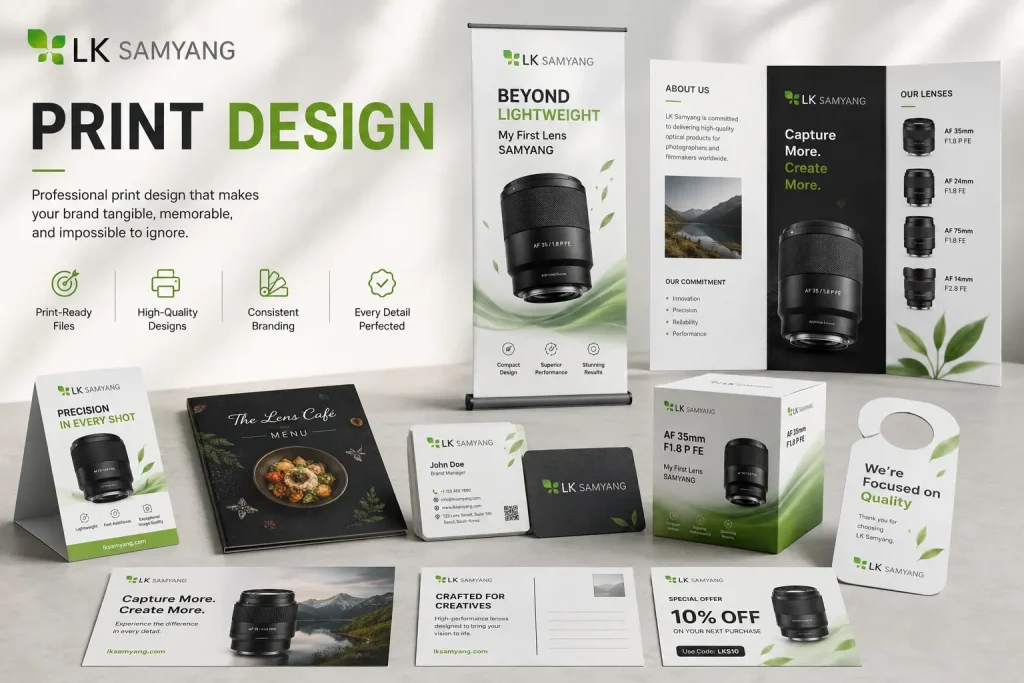
Print isn’t dead, it’s just smaller and more deliberate. Restaurants need menus. Service businesses need yard signs and door hangers. Retailers need packaging. Trade-show exhibitors need pull-up banners and one-pagers. Print design covers all of it, plus the file prep that keeps your printer from calling back with bleed, color profile, or resolution issues.
Most owners don’t realize printers reject files daily for spec errors. A designer who handles print regularly knows the requirements cold and saves you reprint costs.
UI/UX design
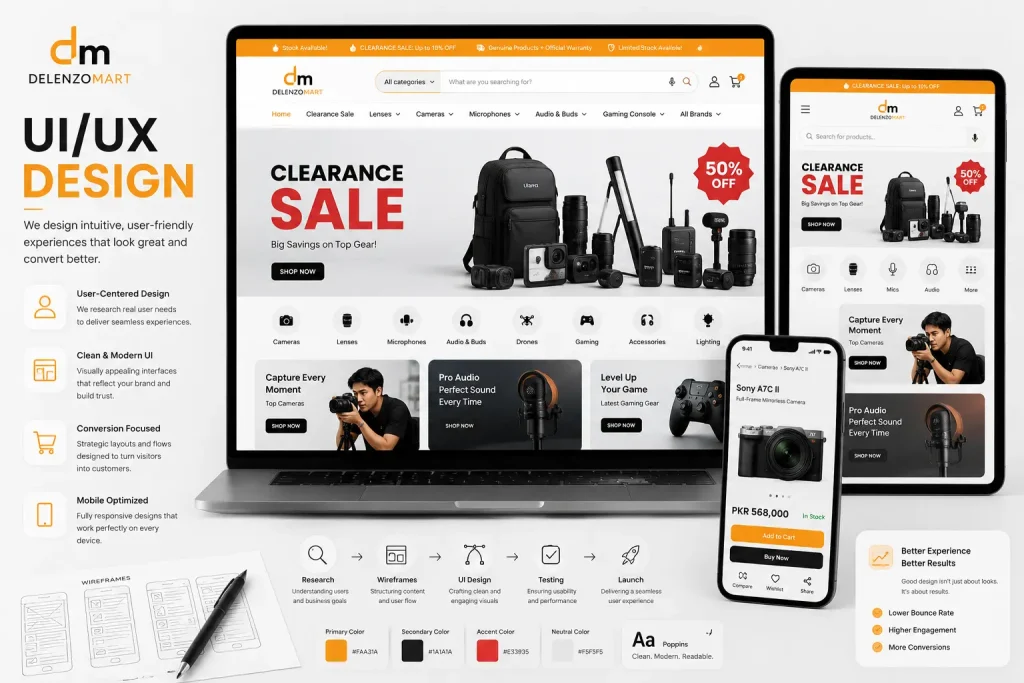
UI/UX work shapes how your website, app, or product feels to use.
UI is the visual layer: buttons, type, color, spacing.
UX is the structure: where things go, what happens when you tap, how a checkout flows.
For a small business site, this means landing pages that convert, forms that don’t lose people halfway through, and mobile layouts that work on a six-inch screen. Skip this layer and you’ll have a pretty site that nobody actually buys from.
Why small businesses need professional graphic design (not just Canva)
Small businesses need professional graphic design services because templates like Canva can’t deliver brand consistency, trust signals, or asset ownership at scale. Canva works fine for one-off posts and internal docs. It breaks down when you need a coherent identity across your website, ads, packaging, email, and social channels. Professional design gives you original work, the right file types, and a brand system you actually own.
Three reasons the investment pays back:
- Brand trust moves revenue. The 2024 Edelman Trust Barometer found trust is a top driver of buying decisions. Visual consistency is one of the strongest trust signals. A logo that looks DIY tells customers you might be DIY too.
- You stop redoing the same work. A pro hands you a brand kit, source files, and templates. That ends the “where’s the high-res logo?” Slack message every two weeks.
- You compete with bigger players. A polished brand makes a five-person business look like a 50-person one. Buyers notice this before they read a single headline.
Canva still has a place — internal docs, quick previews, draft mockups. It’s just not a substitute for owning your visual system.
How much do graphic design services cost for small businesses?
Graphic design pricing ranges from $50 for a freelance flyer to over $25,000 for an agency-led website UI build in 2026. Most small business owners spend $500–$3,000 on a logo and brand basics. A full identity system runs $1,500–$8,000. Ongoing design support typically costs $300–$2,500 per month.
Here’s a realistic breakdown by provider type:
| Service | Freelancer | Agency | Subscription |
| Logo design | $200–$800 | $800–$3,000 | Included in plan |
| Brand identity package | $500–$2,000 | $1,500–$8,000 | Included in plan |
| Social media templates (set of 10) | $150–$600 | $500–$2,500 | Included in plan |
| Business card design | $50–$200 | $200–$800 | Included in plan |
| Brochure (tri-fold) | $150–$500 | $500–$2,000 | Included in plan |
| Website UI design (5 pages) | $800–$5,000 | $3,000–$25,000 | Not typically offered |
Where you land in those ranges depends on which kind of provider you hire. Here’s how each option actually works.
Freelancers
Freelancers are the most affordable graphic design services option for early-stage businesses. You hire one designer, brief them directly, and pay per project or per hour. Rates run $25–$150 per hour depending on experience and location.
The upside is real: lower cost, direct communication, fast turnaround on small jobs. The downsides matter too. One person handles design, revisions, and email. Quality varies wildly if you don’t screen portfolios carefully. And you have zero backup if they go on vacation mid-project.
Best use: one-off projects and supplementary work, not your entire brand system.
Design agencies
A graphic design services company brings a team of strategists, art directors, designers, and often copywriters and developers under one roof. You get senior creative direction, multiple design rounds, and a project manager handling timelines.
Agencies cost more because you’re paying for process and capacity. Expect $3,000–$25,000+ for a full brand build, depending on scope and reputation. The value shows when you need work delivered on schedule, multiple specialists working in parallel, or strategic input on positioning and brand architecture.
Best fit: businesses with a growth budget that need design tied to marketing or web outcomes.
Subscription-based services
Online graphic design services sold on a monthly subscription give you unlimited requests for a flat fee, usually $400–$2,500 per month. You submit a brief, a designer picks it up, and you get the file back in 24–72 hours.
These work well for businesses with steady, low-to-medium complexity design needs like social posts, ad variants, sales decks, and ebooks. They struggle with strategic work like brand identity development or complex multi-page websites, since you rarely get the same designer twice in a row.
Best use: volume work. Pair them with a specialist for anything foundational.
In-house designers
Hiring a designer full-time runs $55,000–$95,000 per year in the US, plus benefits, software, and equipment. It makes sense once you’re producing enough creative weekly that an outside team becomes the bottleneck.
Until then, you’re paying a salary for someone with downtime. Most small businesses are better served by a freelancer or subscription model for two to three years before bringing the role inside.
What to look for when hiring a graphic design company
Five things separate a good design partner from a frustrating one. Check for these before signing anything.
- Industry experience: A designer who’s done five restaurant brands sees patterns a generalist won’t. Ask for work in your category and ask what worked or didn’t.
- Process and revision policy: They should explain briefing, rounds of revisions, and approvals in plain language. Confirm how many revision rounds are included and what counts as a new round versus a tweak. Vague answers here mean missed deadlines and surprise invoices later.
- Pricing transparency: Flat-rate quotes or clearly capped hourly estimates beat open-ended billing. Ask what triggers extra fees and get it in writing.
- File delivery and ownership: You should walk away with editable source files (AI, PSD, Figma), web and print exports, and full rights to use them. Some providers withhold source files or charge extra for them. Read the contract.
- Who actually does the work: Agencies sometimes pitch with senior portfolios and assign juniors to the project. Subscription services rotate designers. Ask who’s on your account, see their work, and confirm it in writing.
- Custom work over templates: Confirm the designer offers custom graphic design services, not recycled template work. Template-based “design” looks identical to thousands of other businesses and limits your trademark options later.
Graphic design services checklist for small businesses
Use this before you start any design engagement. It prevents most of the problems that show up halfway through a project.
Before you brief anyone:
- Document your target customer, top three competitors, and the words you’d never want associated with your brand.
- Gather examples of brands you admire, both inside and outside your industry. Visual references brief a designer faster than any description.
- Decide on a budget range and a single decision-maker. Design-by-committee kills projects.
- Set a realistic deadline tied to a business event like a launch, a trade show, a campaign.
During the project:
- Ask for two or three concept directions before refinement, not a single “final” first draft.
- Provide written feedback in one document, not 14 Slack messages.
- Approve in writing at each milestone so revisions don’t reopen settled work.
Deliverables you should walk away with:
- Logo variants including primary, secondary, icon mark, horizontal, stacked, and reversed (light-on-dark) versions.
- Color palette with HEX, RGB, CMYK, and Pantone values.
- Typography system covering primary, secondary, and web-safe fallback fonts.
- A style guide that documents how the brand is applied across touchpoints.
- Social media assets — profile images, cover images, post templates sized for each platform.
- Print-ready files with proper bleed, CMYK color, and 300 DPI resolution.
- Editable source files (AI, PSD, Figma) and web-ready exports (SVG, PNG, WebP).
- Optional but useful: pitch deck templates, email signature graphics, and proposal templates.
After delivery:
- Confirm full IP ownership and licensing for any third-party assets, fonts, or stock imagery used.
- Store everything in one shared drive your team and future contractors can access.
Treat this checklist as your standard for any graphic design and branding services engagement going forward. It works for a $500 logo job and a $25,000 brand build.
How Delenzo Technologies approaches small business graphic design
Delenzo Technologies delivers graphic design services for small business owners across logo design, brand identity, social media graphics, print collateral, and website UI/UX, all from one team. Every engagement starts with discovery, not a template, so design decisions follow strategy.
What sets our process apart:
- Every engagement opens with a 30-minute discovery call to understand your customers, competitors, and goals, not a 40-page questionnaire.
- One team handles logo, brand, social, print, and web UI under one roof, so you’re not juggling three vendors for one brand.
- We deliver three design directions in week one, then refine the one you pick instead of pushing a single “final” first draft.
- Senior designers work on your account from start to finish. We don’t pitch with senior portfolios and assign juniors to the project.
- Engagements run month-to-month with no minimum contracts or long retainers, so you can scale design support up or down as your business needs change.
You walk away with source files, brand guidelines, and a template library you actually own. We’ve helped local service businesses, e-commerce stores, and B2B startups across the US ship complete brand systems without agency overhead or six-month timelines.
Conclusion
Design is one of the few business investments that compounds. Every customer interaction either reinforces your brand or weakens it. The right partner pays for themselves in trust, conversions, and the hours you stop spending on creative cleanup.
If you’re ready to upgrade your visuals, Delenzo Technologies offers graphic design services for small business owners who want senior creative work without agency pricing or long contracts. Book a free consultation, share where you’re stuck, and walk away with a plan you can put to work this quarter.
Let’s Build Something Great Together
Have a project in mind? Contact our team and let’s discuss how we can help your business grow.
Contact UsFrequently Asked Questions
A logo is the symbol or wordmark customers recognize. A brand identity is the full system around it: color palette, typography, photography style, voice, and rules for how everything appears across touchpoints.
Most small businesses need a logo, brand identity system, social media templates, business cards, and a website UI. Print collateral and packaging come next, based on whether the business sells online, in-store, or both.
Look for providers who offer flat-rate pricing, clear scopes, and senior designers on your account. A focused agency or specialist freelancer with transparent pricing often costs less than fixing template-based work or rebranding a year later.
Request editable source files (AI, PSD, Figma), web exports (JPG, PNG, SVG, WebP), and print-ready files (PDF, EPS) at 300 DPI. Color values should include HEX, RGB, CMYK, and Pantone codes.
Canva works for quick internal docs, social previews, and draft mockups. It falls short for original logos, brand systems, and trademark-eligible work because templates are shared across thousands of other businesses.