


Most businesses treat the end of filming as the finish line. The footage exists, the project feels done. In reality, recording is only the first step.
Raw footage rarely holds attention. Pauses, uneven audio, and slow moments push viewers away within seconds. Editing is where a video becomes marketing. It decides pacing, clarity, emotion, and the moment a viewer acts. That is why professional video editing services are a performance investment, not a finishing touch.
This guide covers how editing affects retention, engagement, reach, and revenue.
Why Video Editing Has a Direct Impact on Marketing Performance
Editing shapes viewer experience, and viewer experience drives business results. A well edited video guides attention, removes friction, and makes the message easy to absorb.
Poor editing does the opposite. It forces viewers to work harder to understand the point. That effort creates drop off, and drop off signals low quality to platform algorithms.
Every editing decision has a downstream effect. Cutting two dead seconds improves retention. Adding captions expands reach to silent viewers. Fixing audio increases perceived credibility. These small changes compound across thousands of views.
The result is measurable. Better editing improves watch time, watch time improves distribution, and distribution improves lead volume.
First Impressions Determine Viewer Retention
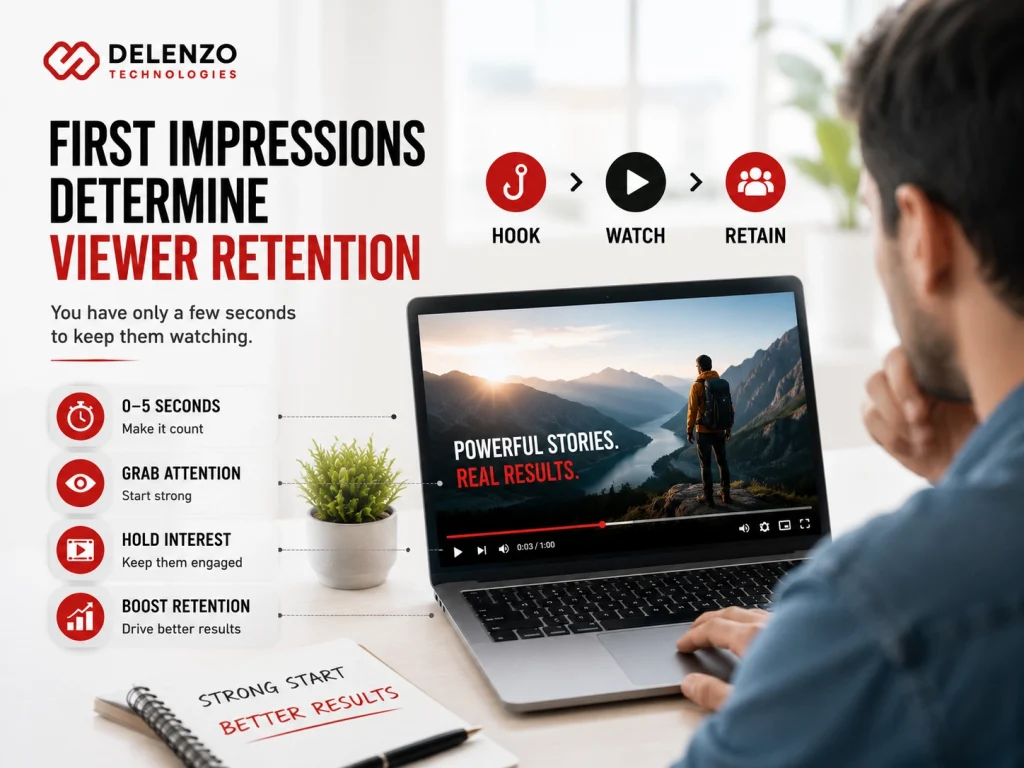
The first three to five seconds carry more weight than the rest of the video combined. Viewers decide almost instantly whether to continue watching.
Editors control that decision. They choose the opening frame, the first line of dialogue, and the moment the hook lands. A slow logo animation at the start pushes viewers away.
Strong openings usually share a few traits:
- The main promise appears immediately, not after an introduction
- Motion or visual interest starts on the first frame
- Audio begins clean, without silence or background noise
- Text or captions confirm the topic for muted viewers
Pacing matters just as much. Long static shots create hesitation. Tight cuts create momentum and keep the viewer moving forward.
Visual quality reinforces the same signal. Color balance, exposure, and sharpness tell viewers this content deserves their time.
Why Audience Attention Is Harder to Capture Than Ever
Attention has become the scarcest resource in marketing. Users scroll through dozens of videos in a single session. Each one competes for the same few seconds.
Platforms train audiences to expect fast value. Anything slow feels like a cost. A viewer will leave a good video simply because a faster one exists nearby.
This shifts the editor’s job. Holding attention now matters as much as capturing it. Mid video drop off often happens in the quiet stretches where nothing changes on screen.
Experienced editors solve this with rhythm. They vary shot length, introduce visual changes, and cut before interest fades. A skilled video editing company builds this pacing intentionally rather than by feel.
How Professional Video Editing Increases Engagement
Professional editing increases engagement by making content easier to understand and more emotionally effective. Timing, music, and visual emphasis shape how viewers feel, and feeling drives interaction.
Engagement covers likes, comments, shares, saves, and completed views. Editing influences all of them because it controls how the content lands. Three editing decisions do most of the work here: story structure, visual clarity, and platform fit.
Better Storytelling Keeps Audiences Interested
Storytelling is structure, not decoration. It gives viewers a reason to stay through the middle of a video.
Every strong marketing video follows a recognizable flow. It opens with a problem, builds tension, delivers a solution, and closes with a clear next step. Editing controls where each beat lands.
Sequencing decisions make the difference:
- Leading with the outcome instead of the background
- Removing content that repeats a point already made
- Placing the strongest visual proof at the midpoint
- Ending before the energy drops
Raw footage almost never follows this order naturally. The story is assembled in the edit, which is why a skilled video editing agency starts with narrative before touching effects.
Visual Effects, Motion Graphics, and Captions Improve Interaction
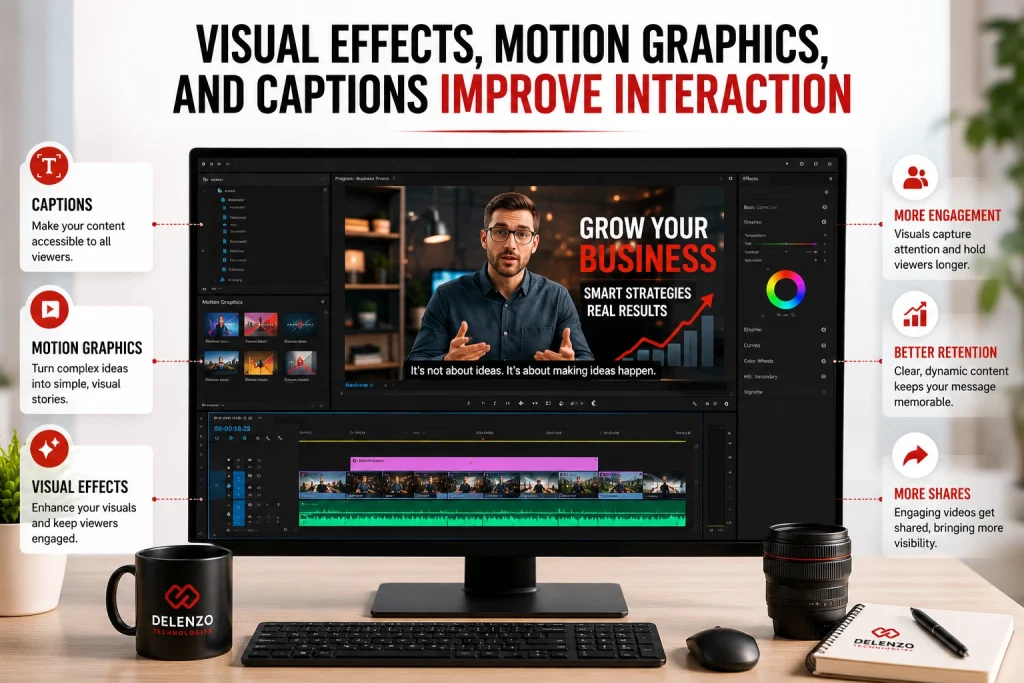
Visual enhancements are comprehension tools. Used well, they reduce the effort required to follow along.
Motion graphics explain things words struggle with. Data, processes, and comparisons become clear in seconds when shown visually. Lower thirds identify speakers without interrupting the flow.
Captions carry enormous weight. Most social video plays without sound by default, so uncaptioned content loses a large share of its audience immediately. Captions also improve accessibility and give platforms text to read, which helps discovery in search and recommendation feeds.
Effects need restraint. Transitions that draw attention to themselves distract from the message. The best work feels invisible to the viewer.
Platform-Specific Editing Improves Performance
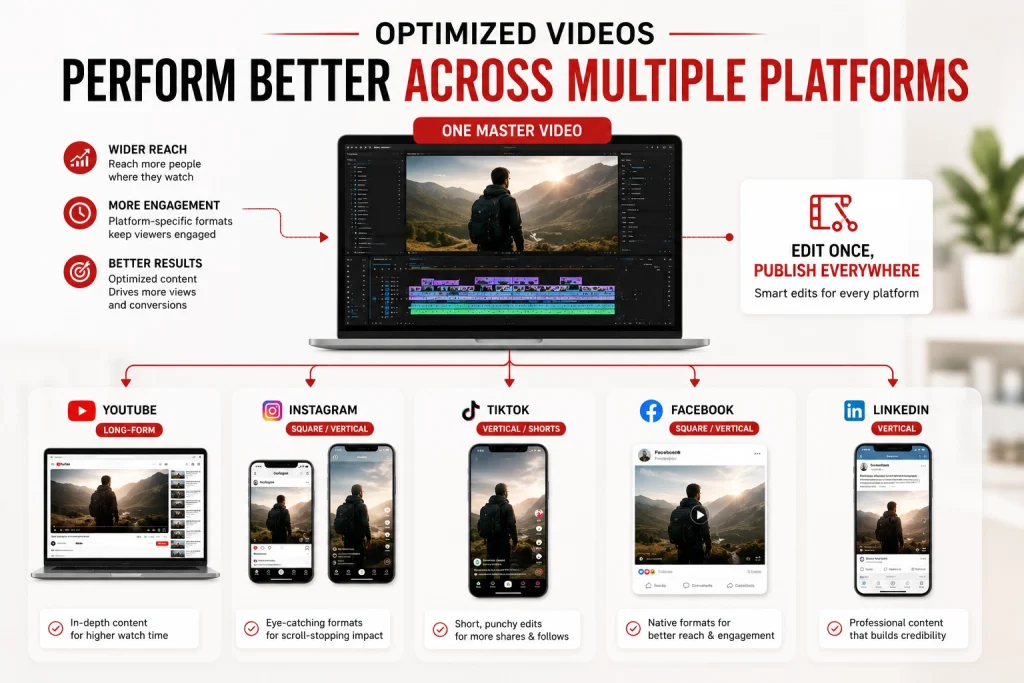
One version of a video rarely performs everywhere. Each platform rewards different behavior, and editing must match.
YouTube favors longer watch time and structured content. Instagram and TikTok reward fast hooks and vertical framing. Facebook leans toward captioned, self explanatory clips. LinkedIn responds to clear, professional, value led content.
The same footage should produce different edits:
- YouTube: horizontal framing, chapters, deeper explanation
- Instagram and TikTok: vertical, three second hook, tight runtime
- Facebook: square or vertical, captions on by default
- LinkedIn: clean visuals, insight first, minimal effects
Teams that reuse one edit across every channel see uneven results. Dedicated social media video editing services handle this reformatting so each platform receives content built for its audience.
Video Editing Features and Their Impact on Engagement
Editing elements affect engagement in different ways, and the table below shows which element drives which behavior.
| Editing Element | Primary Effect on Engagement | Why It Works |
| Captions and subtitles | Higher completion rate | Keeps silent viewers watching and understanding |
| Pacing and cut rhythm | Lower mid video drop off | Prevents dead moments that trigger scrolling |
| Motion graphics | More shares and saves | Makes complex ideas easy to grasp quickly |
| Audio mixing | Longer watch sessions | Removes listening fatigue and distraction |
| Transitions | Smoother viewing flow | Connects scenes without breaking attention |
| Consistent branding | Stronger recall | Builds familiarity across repeated exposure |
| Hook editing | Higher retention in first seconds | Delivers value before the viewer decides to leave |
How Professional Video Editing Increases Video Views
Views are the result of distribution, and distribution is earned. Platforms promote content that keeps people watching and reacting.
Editing directly influences the metrics algorithms measure. It shapes retention curves, completion rates, and repeat views. Better editing produces better signals, and better signals produce more reach.
Better Watch Time Leads to Higher Visibility
Watch time is the clearest quality signal a platform can read. It shows whether the content delivered on its promise.
Retention curves reveal exactly where editing failed. A sharp drop at eight seconds usually means a weak hook. A steady decline often points to pacing problems.
Editors use this data to improve future work. They shorten setups, cut filler, and move strong moments earlier. Each adjustment lifts the average view duration.
Higher watch time expands reach automatically. The platform shows the video to more people, which produces more views without more ad spend. This compounding effect is why youtube video editing services focus heavily on retention analytics.
Optimized Videos Perform Better Across Multiple Platforms
Technical optimization affects whether a video gets seen at all. Format issues cause silent failures that most teams never notice.
Aspect ratio is the most common problem. A horizontal video on a vertical feed wastes most of the screen. Viewers register it as low effort and scroll past.
Thumbnails influence click through rate before the video plays. A frame grab rarely competes with a designed thumbnail built for clarity at small sizes.
Other technical details matter too:
- Correct resolution and bitrate for each platform
- Safe zones that keep text away from interface elements
- File compression that preserves quality after upload
- Opening frames that work as static previews
Businesses using video editing services for youtube often need separate deliverables for shorts and long form. Handling both correctly turns one shoot into multiple performing assets.
How Professional Video Editing Improves Conversion Rates
Views and engagement matter only when they lead somewhere. Conversion is where video editing proves its commercial value.
Editing influences buying decisions by controlling trust, clarity, and timing. A viewer converts when they understand the offer, believe the source, and know the next step.
Building Trust Through Professional Video Quality
Production quality functions as a credibility signal. Viewers judge businesses by how their content looks and sounds.
Uneven audio, inconsistent color, and abrupt cuts create doubt. The viewer may not identify the problem, but they feel it. That feeling transfers to the brand.
Polished editing does the opposite. It suggests attention to detail, established processes, and a business that takes itself seriously. For high value services, this perception shift is significant.
Trust builds through consistency too. When every video shares the same color treatment, typography, and pacing, the brand feels reliable. Companies that outsource video editing services to a dedicated partner often gain this consistency faster than in-house teams juggling other work.
Strong Calls-to-Action and Viewer Flow
A call to action fails when it arrives at the wrong moment. Editing controls that timing.
The strongest placement follows a moment of value. Once the viewer understands the benefit, the invitation feels natural rather than pushy. Placing it after the energy drops wastes it.
Effective CTA editing usually includes:
- A visual cue that appears with the spoken prompt
- A pause that gives the message room to land
- On screen text that shows exactly what to do next
- An end card that stays long enough to read
Viewer flow matters just as much. The edit should build toward the action, not interrupt with it. When the structure supports the ask, conversion rates rise without any change to the script.
Key Video Editing Elements That Drive Better Results
Not every editing decision carries the same weight. A few elements produce most of the performance gain.
Businesses with limited budgets should prioritize these before adding effects or advanced techniques.
Audio Quality, Color Grading, and Branding
Audio is the most underrated element in video. Viewers tolerate imperfect visuals far longer than bad sound.
Good audio work includes noise removal, level balancing, and music mixed under dialogue. These fixes are invisible when done right and obvious when skipped.
Color grading creates mood and consistency. It matches shots from different times and cameras into one coherent look. It also signals production value instantly.
Branding ties everything together. Consistent intros, lower thirds, fonts, and color palettes make content recognizable. Over time, viewers identify the brand before the logo appears. Full post production video editing services typically bundle these elements into a repeatable process.
Video Length, Pacing, and Content Structure
Length should follow content, not convention. A video runs as long as it holds value and no longer.
Pacing controls perceived length. A tightly edited five minute video feels shorter than a slow two minute one. Cutting pauses, filler words, and repeated points tightens the experience.
Structure keeps viewers oriented. Clear sections, visual signposts, and logical progression prevent confusion. Viewers stay when they know where the video is heading.
Engagement vs Views vs Conversions Comparison
Different editing techniques serve different goals. The table below shows where each one tends to have the strongest effect, based on common patterns in video performance.
| Editing Technique | Engagement | Views | Conversions |
| Hook editing in first 3 seconds | Strong | Strong | Moderate |
| Captions and subtitles | Strong | Moderate | Moderate |
| Pacing and filler removal | Strong | Strong | Low |
| Motion graphics and explainers | Strong | Moderate | Strong |
| Platform formatting and thumbnails | Moderate | Strong | Low |
| Audio mixing and color grading | Moderate | Low | Strong |
| CTA placement and end cards | Low | Low | Strong |
Read the table as a priority guide. Teams chasing reach should fix hooks, pacing, and formatting first. Teams chasing leads should invest in audio, grading, and CTA timing.
Common Editing Mistakes That Reduce Video Performance
Most underperforming videos share the same fixable problems. Recognizing them early saves budget and reach.
- Slow openings. Logo animations and long introductions push viewers away before the value appears.
- Weak audio. Background noise, uneven levels, and loud music make content tiring to watch.
- Excessive effects. Flashy transitions distract from the message and date the content quickly.
- Missing captions. Silent autoplay means uncaptioned videos lose most of their audience.
- Inconsistent branding. Different looks across videos weaken recall and reduce trust.
- Poor pacing. Dead air in the middle creates predictable drop off points.
- Wrong format. Horizontal edits on vertical feeds waste screen space and attention.
- Buried CTAs. Actions placed after the energy fades rarely get followed.
Fixing these issues often improves performance more than adding new production value. Many businesses find that online video editing services solve these problems faster than building an internal team.
Why Businesses Should Invest in Professional Video Editing Services
Businesses invest in professional editing because it improves measurable outcomes, not appearance. Skilled editors raise retention, reach, and conversion by applying proven pacing, audio, and structure decisions that basic editing skips.
The advantage comes down to three things:
- Pattern recognition. Experienced editors have tested what works across hundreds of videos and platforms.
- Workflow reliability. Professional teams deliver on schedule, handle multiple formats, and hold brand standards without supervision.
- Content economics. One shoot becomes a long form video, short clips, and platform variants.
Businesses comparing options often judge the best video editing services on price alone. Performance history, turnaround reliability, and platform understanding are better signals.
At Delenzo Technologies, our editing starts with the goal, not the footage. We build around retention, clarity, and the action each video needs to drive.
Final Thoughts
Video editing is not cleanup work. It determines whether a video earns attention, keeps it, and converts it.
The main takeaways are simple. Openings decide retention. Pacing and captions protect engagement. Watch time drives reach. Trust and CTA timing drive conversion.
Businesses that treat editing as a strategic function see better results from the same footage. Those who treat it as a final step leave performance unused.
If your videos are being made but not performing, the edit is usually the gap. Our professional video editing services are built to close it, turning existing content into measurable business outcomes.
Frequently Asked Questions
How does professional video editing increase engagement?
Professional editing increases engagement by controlling pacing, captions, visual variety and storytelling. Tight cuts remove dead moments, captions keep silent viewers watching, and clear structure holds attention through the middle of the video.
Can professional video editing increase video views?
Yes. Editing improves watch time and retention, which are the signals platforms use to decide distribution. Stronger hooks, correct formatting, and designed thumbnails earn more reach without additional ad spend.
Does video editing improve conversion rates?
Yes. Well-edited video on landing pages is widely reported to lift conversions significantly. Clean audio and color build trust, while a well-timed call to action moves viewers toward buying or signing up.
Why is professional video editing important for marketing?
Editing turns raw clips into a story that holds attention. It makes brands look credible, simplifies complex products, and moves viewers toward buying. Unedited footage rarely achieves any of those outcomes.
Is hiring a professional video editing company worth it?
Yes, when your time is more valuable than the editing fee, or when your brand needs expert polish to grow. Both cases make outsourcing cheaper than the hours and quality you lose.