

Your website is often the first impression a customer forms of your business. A slow site or outdated layout can cost you leads before you say a word. Dallas businesses face a crowded market, and a strong online presence is no longer optional. This guide breaks down pricing, platforms, industry needs, and the full process behind professional web design Dallas companies deliver. Whether you run a local shop or a growing ecommerce brand, you will find clear answers here. We built this guide to help you make a confident, informed decision about your next website project.
How Much Does Web Design Cost in Dallas?
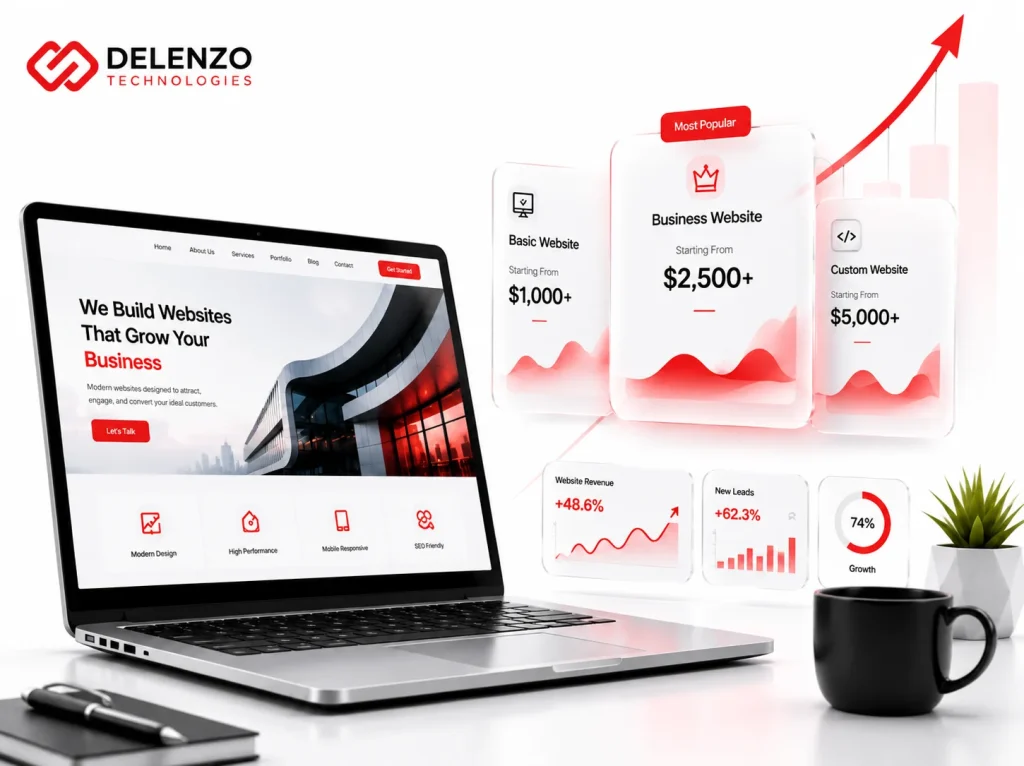
Web design Dallas pricing typically ranges from $1,000 for a basic small business site and it can go more for a custom ecommerce platform. Costs depend on scope, features, and the agency’s experience level. A simple brochure site with five pages costs less than a site with booking systems or online stores. Ongoing maintenance, hosting, and content updates add to the total cost over time. Businesses should budget for both the initial build and future support. Getting a detailed quote upfront prevents surprise costs later in the project.
Dallas Agency Rates vs National vs Offshore: What You’re Actually Paying For
Local Dallas agencies typically charge $50 to $100 per hour for custom work. National agencies often charge more due to overhead and larger client rosters. Offshore developers may quote lower rates, but communication gaps and time zone differences slow projects down. A Dallas web design company offers face-to-face meetings and faster turnaround on revisions. You also gain a partner who understands the local market and competitors. Cheaper is not always better when your website represents your entire brand. Paying for affordable web design does not mean sacrificing quality if you choose the right partner.
Here is a quick comparison to help you weigh your options.
| Factor | Local Dallas Agency | National Agency | Offshore Team |
| Communication | Direct, same time zone | Account manager layer | Time zone delays |
| Turnaround | Fast, local support | Moderate | Often slower |
| Cost | Mid-range | Higher overhead | Lowest upfront |
| Market Knowledge | Strong local insight | Generic approach | Limited local context |
| Long-term Support | Easy to reach in person | Remote only | Often inconsistent |
What’s Included in Professional Web Design Services?
Professional website design services include strategy, layout, content structure, and technical setup. A complete package covers mobile responsiveness, page speed optimization, and basic on-page SEO. Many agencies also include copywriting, image sourcing, and a content management system. Security features like SSL certificates and regular backups should be standard, not optional add-ons. Post-launch training helps your team manage updates without needing a developer. Website development that skips these basics often leads to costly fixes down the road. A thorough proposal should list every deliverable clearly before work begins.
WordPress vs Shopify vs Custom Websites: Which Is Right for Your Business?
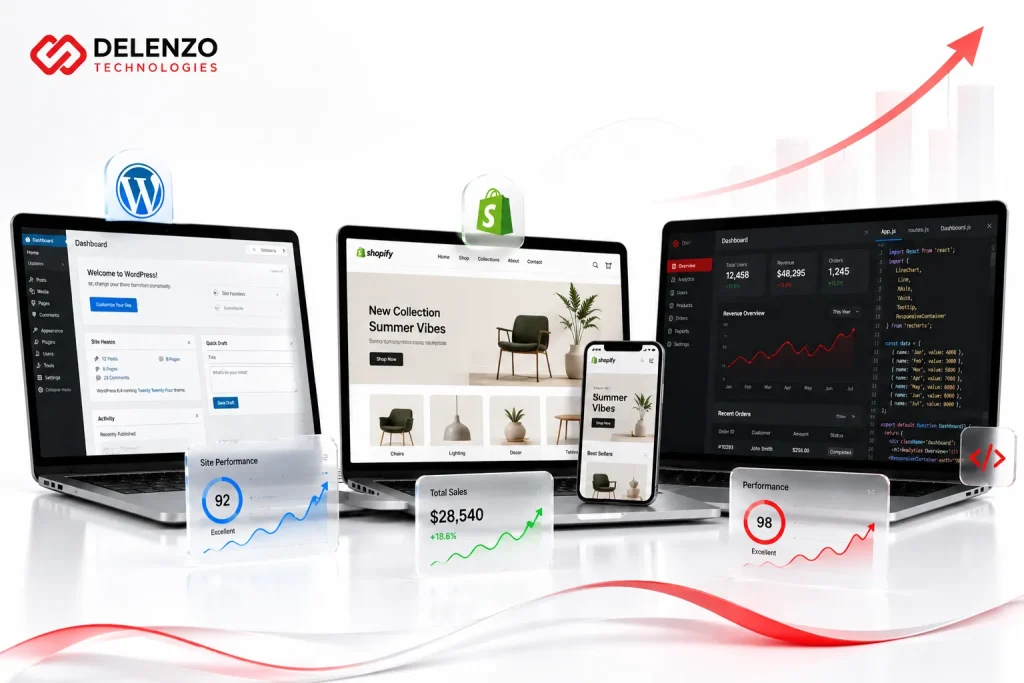
WordPress, Shopify, and custom builds each fit different business goals and budgets. Small businesses with simple needs often do best with WordPress web design or Shopify website development. Companies with unique workflows or complex integrations benefit more from custom website development. The right platform depends on your goals, budget, and how much control you need. The comparison below breaks down each option side by side.
| Factor | WordPress | Shopify | Custom Build |
| Best For | Blogs, service sites, portfolios | Online stores | Unique workflows, complex integrations |
| Setup Cost | Low to mid range | Mid range | Highest |
| Flexibility | High, plugin based | Moderate, app based | Full control |
| Ease of Use | Beginner friendly | Beginner friendly | Requires developer support |
| Ongoing Maintenance | Regular plugin updates | Platform handles updates | Depends on build complexity |
| Scalability | Good for content growth | Built for ecommerce growth | Scales to any requirement |
Web Design by Industry: What Your Business Actually Needs
Different industries have different priorities when it comes to website functionality and trust signals.
Small Business & Local Service Websites
Local service businesses need clear contact information, service area details, and customer reviews. A simple booking or quote request form improves lead capture significantly. Fast load times matter since most visitors browse on mobile devices. Local SEO elements like a Google Business Profile link build trust quickly.
Ecommerce Website Development
Online stores need secure checkout, product filtering, and clear shipping policies to convert visitors. Ecommerce website development should prioritize these fundamentals before adding extra features. High quality product photography increases conversion rates noticeably. Cart abandonment recovery tools help recapture lost sales automatically. Mobile checkout speed is critical since most online shopping happens on phones.
Medical & Healthcare Websites
Healthcare websites need HIPAA-conscious contact forms and clear service descriptions. Patient trust depends on professional design, accurate information, and easy appointment scheduling. Accessibility compliance protects practices from legal risk and serves all patients well.
Law Firm & Legal Websites
Law firm sites need clear practice area pages and strong calls to action. Case results, attorney bios, and client testimonials build credibility fast. A confidential contact form reassures potential clients before they reach out.
Why Web Design and SEO Must Work Together
A beautiful website without SEO structure will not rank on search engines. Search engines evaluate page speed, mobile usability, and clean site architecture. Building SEO into the design process from day one saves time and money. Retrofitting SEO onto a finished site often means rebuilding key pages. Structured headings, alt text, and internal linking should be planned during design. According to Google Search Central, page experience directly influences search visibility. A site built with SEO in mind ranks faster and performs better long term.
How Our Website Design and Development Process Works
At Delenzo Technologies, we follow a structured five stage process for every project. This approach keeps timelines predictable, communication clear, and results consistent across WordPress, Shopify, and custom builds. Whether you need a small business site or a full ecommerce platform, our process removes guesswork. A clear process keeps your project on schedule and free of surprises.
Stage 1: Discovery & Strategy
We start by learning your business goals, audience, and competitors. This stage defines the sitemap, key pages, and content strategy for your project.
Stage 2: Design & Wireframes
Our team builds wireframes to map layout and user flow before visual design begins. You review and approve each page structure before we move forward.
Stage 3: Development
Developers build the site using clean code and the platform that fits your needs. This includes WordPress, Shopify, or fully custom development depending on your goals.
Stage 4: Testing & Quality Assurance
We test every page across devices, browsers, and screen sizes before launch. Forms, links, and checkout flows are checked thoroughly for errors.
Stage 5: Launch & Ongoing Support
After launch, we monitor site performance and provide training for your team. Ongoing support keeps your site secure, updated, and running smoothly.
How to Choose the Right Web Design Company
Choosing a website development company starts with reviewing their portfolio and client results. Look for these signs of a trustworthy partner:
- Case studies showing measurable outcomes, not just visuals
- A clear process with realistic timelines
- Transparent pricing without hidden fees
- Website redesign services if you already have an outdated site
- Reviews and references that confirm consistent quality
A web design Dallas partner with these traits sets the foundation for long term growth. The right partner treats your website as an investment, not just a project.
Local Dallas Agency vs Remote Agency: Which Is Right for You?
Web design Dallas businesses often benefit from working with a local team. In-person meetings allow for faster feedback and stronger collaboration. Local Dallas web developers understand regional competitors and customer expectations firsthand. Remote agencies can work well if communication and processes are strong. However, time zone gaps and slower response times can delay revisions. If your project requires close collaboration, a local partner is usually the better choice. For simple, well-defined projects, a remote agency may still deliver solid results.
Why Choose Delenzo Technologies for Your Website Project?
Delenzo Technologies is a Dallas based digital agency offering full web development services. We handle WordPress, Shopify, and custom website development projects from strategy through launch. Our team builds sites with SEO structure in place from the very first wireframe. We believe web design Dallas businesses deserve pricing that is honest and results that are measurable. From small service businesses to growing ecommerce brands, we tailor every project to your goals. If you are ready for a website that performs, we would love to talk.
Reach out to Delenzo Technologies for a free consultation on your next project.
Frequently Asked Questions
How long does web design take in Dallas?
Most Dallas web design projects take four to ten weeks to complete. Timeline depends on site complexity, chosen platform, number of revisions, and how quickly content and approvals are provided.
Should I hire a local Dallas web design company or a remote agency?
A local Dallas agency offers faster communication, in-person meetings, and stronger market knowledge. Remote agencies can still work well for simple, clearly defined projects backed by strong communication processes.
Do Dallas web design companies build on WordPress and Shopify?
Yes, most Dallas web design companies build on both WordPress and Shopify platforms. WordPress suits content-heavy sites and blogs, while Shopify is built specifically for ecommerce stores.
Does web design affect my Google rankings in Dallas?
Yes, web design directly affects Google rankings for Dallas businesses. Page speed, mobile usability, and clean site structure all influence how well your website ranks locally.