

AI-generated writing has become remarkably sophisticated.
A few years ago, spotting machine-written content was relatively easy. AI text often sounded repetitive, overly polished, generic, or strangely predictable. In 2026, that is no longer the case. Advanced models such as ChatGPT, Claude, and Gemini can now produce essays, reports, product descriptions, research summaries, marketing copy, emails, and technical content that often reads naturally.
That creates an obvious question:
Can a ChatGPT detector still accurately tell whether content was written by AI?
The answer is more complicated than most detector tools suggest.
A modern ChatGPT detector can identify patterns commonly associated with AI-generated text, but it cannot reliably prove authorship. Detection systems work with probabilities, linguistic signals, and machine-learning classifications—not certainty.
For students, teachers, publishers, marketers, SEO professionals, and businesses, understanding that distinction is essential.
This guide explains how ChatGPT detectors work, how accurate they are, which tools are worth considering in 2026, why false positives happen, and when AI detection results should—or should not—be trusted.
Can You Really Detect ChatGPT-Generated Content?
Yes, AI-generated content can often be detected.
But “detected” does not mean “proven.”
Most AI detectors analyze a piece of text and estimate whether its writing patterns resemble content produced by a large language model.
A detector may return a result such as:
- likely AI-generated;
- mostly human-written;
- mixed AI and human content;
- or a percentage-based AI probability.
These scores can be useful, but they should always be interpreted carefully.
OpenAI itself previously released an AI-text classifier and later discontinued it because of accuracy limitations. The company reported that the classifier correctly identified only a portion of AI-written text while also incorrectly flagging some human-written content.
The lesson is important:
AI detection can provide evidence, but it is not digital fingerprinting.
What Is a ChatGPT Detector?
A ChatGPT detector is a tool designed to estimate whether written content was generated by ChatGPT or another artificial intelligence system.
These tools are also commonly known as:
- AI content detectors;
- AI writing detectors;
- ChatGPT checkers;
- AI text classifiers;
- AI authenticity checkers.
A plagiarism checker looks for matching content that already exists elsewhere.
A ChatGPT detector works differently.
Instead of asking:
“Has this sentence appeared before?”
it attempts to answer:
“Does this writing behave statistically like AI-generated text?”
To make that judgment, detection systems may evaluate sentence structure, vocabulary patterns, predictability, stylistic consistency, variation, and numerous other signals.
How Does a ChatGPT Detector Work?
There is no universal detection formula.
Companies such as GPTZero, Originality.ai, Copyleaks, Scribbr, QuillBot, and Winston AI use their own proprietary methods.
However, most AI detectors rely on a combination of language statistics and machine-learning classification.
Perplexity & Text Predictability
One commonly discussed concept is perplexity.
In simple terms, perplexity measures how predictable a sequence of words appears to a language model.
AI models generate text by predicting which words are most likely to appear next.
That means some AI-generated passages can be unusually predictable.
For example, an AI system discussing digital marketing might naturally produce phrases such as:
“Businesses should develop a comprehensive digital marketing strategy to increase visibility and improve customer engagement.”
The sentence is perfectly correct—but also highly predictable.
Human writing may contain more unexpected phrasing, personal habits, unusual word choices, or abrupt changes in sentence structure.
However, perplexity alone is not enough to identify AI writing.
Professional writers can produce extremely predictable content, while modern AI systems can be prompted to create highly varied prose.
Burstiness & Writing Patterns
Another commonly discussed concept is burstiness.
Burstiness refers to variation in writing style.
Human writers often mix:
- short sentences;
- longer explanations;
- incomplete thoughts;
- complex structures;
- unusual transitions;
- and changes in rhythm.
Older AI systems often produced writing with highly consistent sentence lengths and patterns.
That made AI-generated text easier to identify.
Modern AI models are far more advanced and can intentionally vary sentence structure, tone, rhythm, and vocabulary.
As a result, relying on simple stylistic characteristics is becoming increasingly unreliable.
Machine Learning Classification
The most advanced ChatGPT detectors use machine-learning classifiers.
These systems are trained using large datasets containing examples of both human-written and AI-generated content.
The detector learns patterns associated with each category and then evaluates new text against those patterns.
Instead of returning an absolute answer, modern tools may classify a document as:
Human
AI
or
Mixed
Some also provide probability or confidence scores.
This distinction matters.
A result showing “85% AI probability” does not mean there is an 85% certainty that ChatGPT wrote the document.
It means the detector found patterns that its model associates strongly with AI-generated writing.
Can ChatGPT-Generated Text Really Be Detected?
Completely unedited AI-generated content is often easier to detect.
For example, if someone asks ChatGPT to generate a 1,000-word essay and copies the output without making any changes, certain detectors may identify it successfully.
Detection becomes significantly more difficult when:
- a human rewrites parts of the content;
- original examples are added;
- sentence structures are changed;
- AI and human content are combined;
- the text is short;
- or the AI model is newer than the detector.
That last point is especially important.
AI models evolve rapidly.
A detector trained primarily on older ChatGPT outputs may struggle with writing produced by newer model generations.
This creates a continuous race between AI generation technology and AI detection technology.
How Accurate Are ChatGPT Detectors?
There is no single accuracy rate for ChatGPT detectors.
Performance varies significantly depending on:
- the detector being used;
- text length;
- writing style;
- language;
- model generation;
- level of human editing;
- subject matter;
- and testing methodology.
Some companies advertise accuracy rates above 90% or even 99%.
Those figures should be interpreted carefully.
A detector might perform exceptionally well on one controlled benchmark but perform differently when evaluating real-world content.
Independent comparisons have repeatedly shown that detector performance varies across tools and content types.
The safest conclusion is:
AI detectors are useful screening tools, but none should be treated as infallible.
Best ChatGPT Detectors in 2026
Several AI detection tools have established strong reputations.
The best choice depends on whether you are a student, educator, publisher, marketer, or enterprise user.
GPTZero
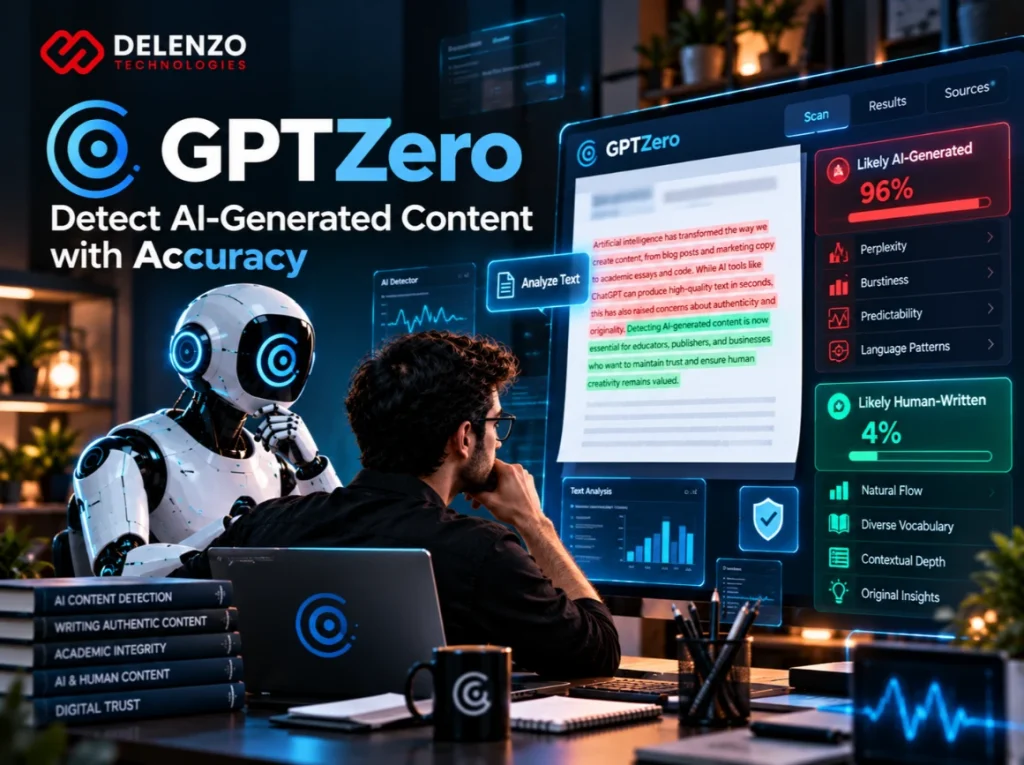
GPTZero is one of the most recognizable AI detection platforms.
It became particularly popular in education and continues to focus heavily on differentiating human-written, mixed, and AI-generated content.
GPTZero can be useful for:
- teachers;
- students;
- educational institutions;
- editors;
- and general content verification.
Its classification system also provides additional context rather than presenting every result as a simple yes-or-no judgment.
Originality.ai
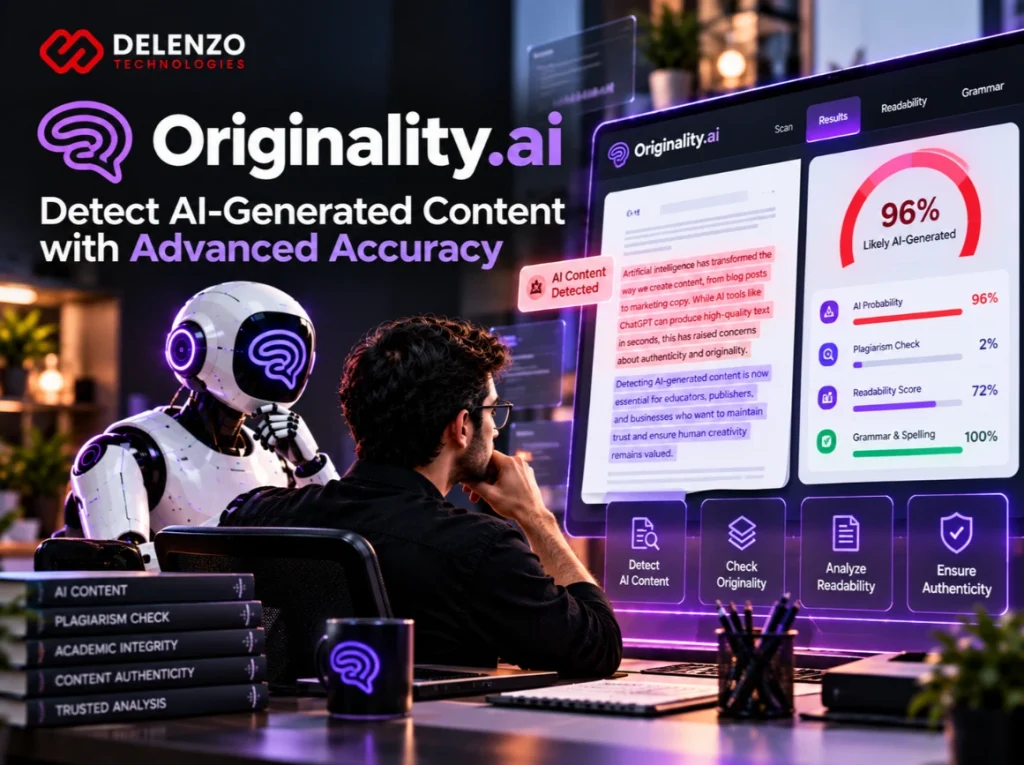
Originality.ai is particularly popular among publishers, content agencies, website owners, and editorial teams.
Unlike tools focused mainly on education, Originality.ai is positioned heavily toward professional publishing workflows.
It can be useful when evaluating:
- outsourced articles;
- SEO content;
- editorial submissions;
- freelance writing;
- and large content libraries.
For publishers processing significant quantities of content, its broader editorial workflow can be valuable.
Copyleaks AI Detector
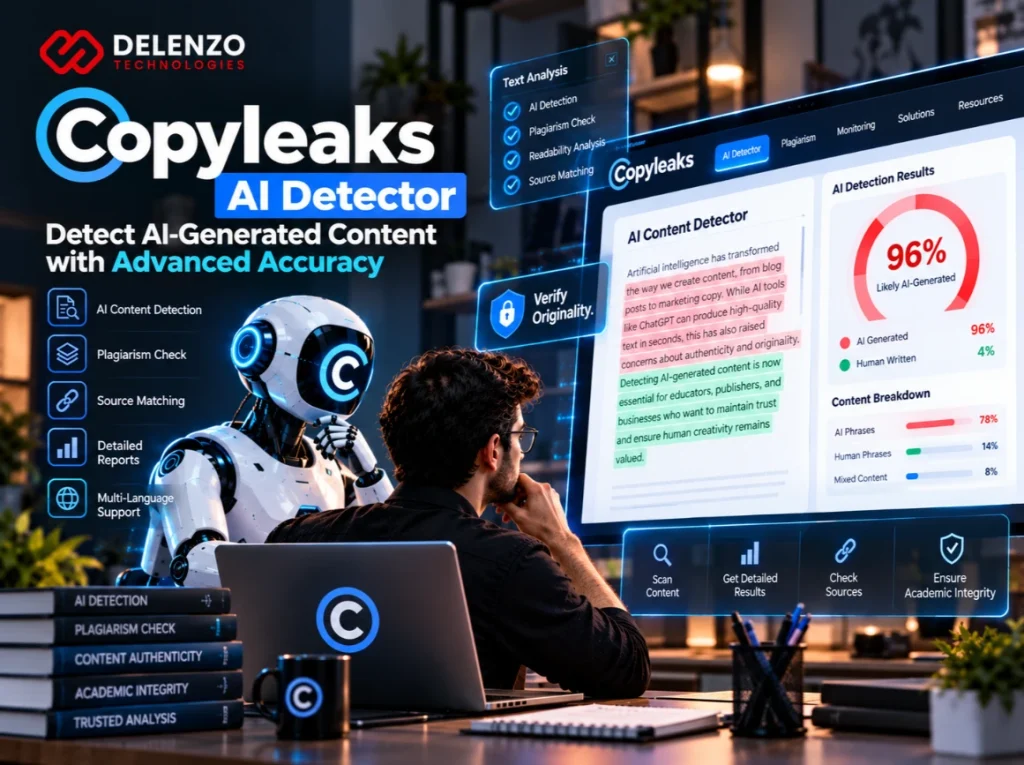
Copyleaks provides both AI detection and plagiarism-related solutions.
It is used across education, enterprise, publishing, and professional environments.
One advantage is that Copyleaks regularly updates its detection technology as new AI models are released.
That matters because AI detection systems must constantly adapt to newer language-model behavior.
QuillBot AI Detector
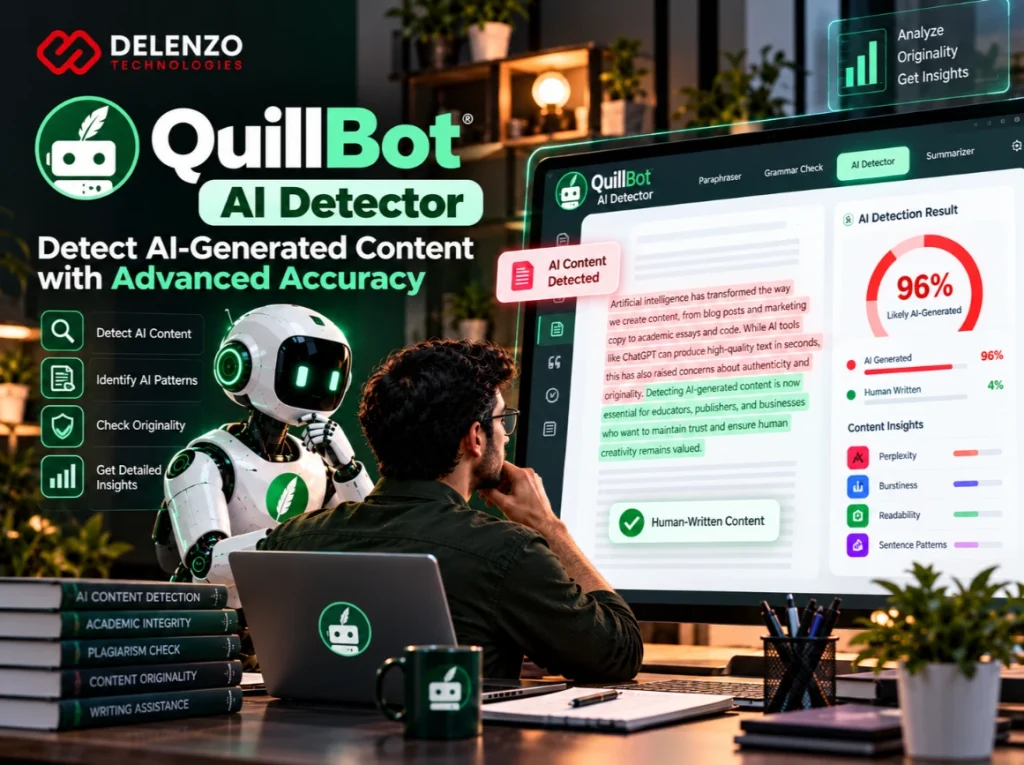
QuillBot provides an easily accessible AI detector alongside its popular writing and paraphrasing tools.
Its free availability makes it particularly attractive to:
- students;
- freelancers;
- bloggers;
- and casual users.
For quick checks, QuillBot can be useful.
For high-stakes academic or professional decisions, however, its result should still be verified using additional evidence.
Scribbr AI Detector
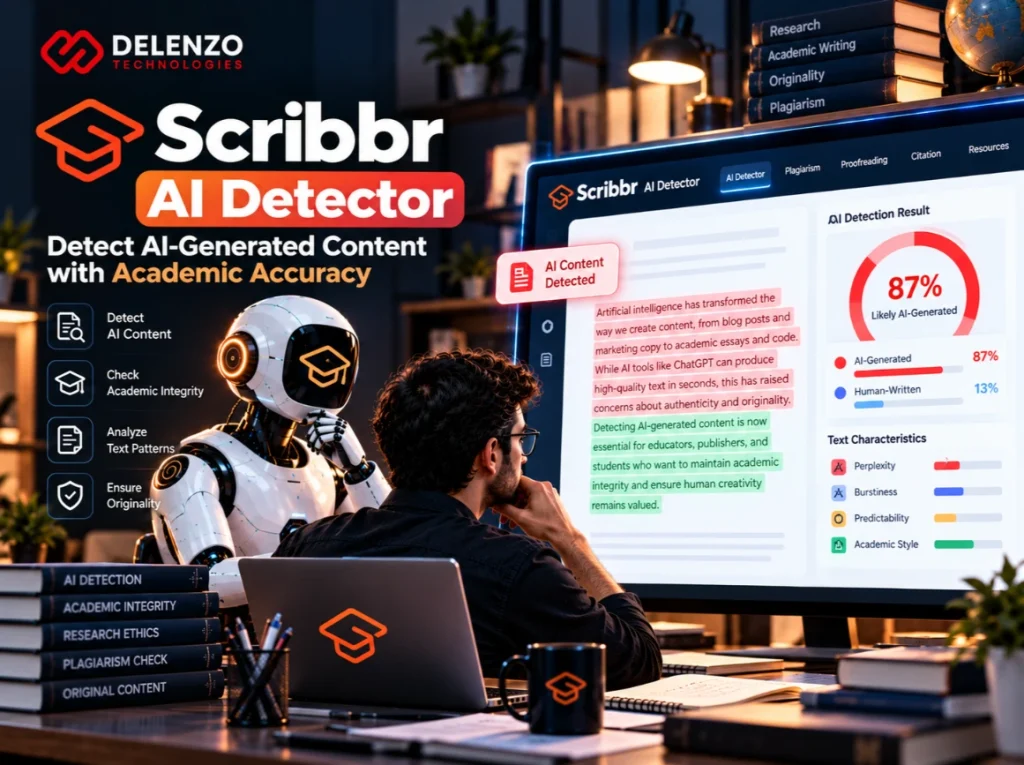
Scribbr is widely known within academic writing.
Its AI detector is especially useful for students and researchers because it presents results in a relatively straightforward format.
Scribbr also clearly acknowledges an important limitation:
AI detection is not 100% accurate.
That transparency is valuable when evaluating detection results.
Winston AI
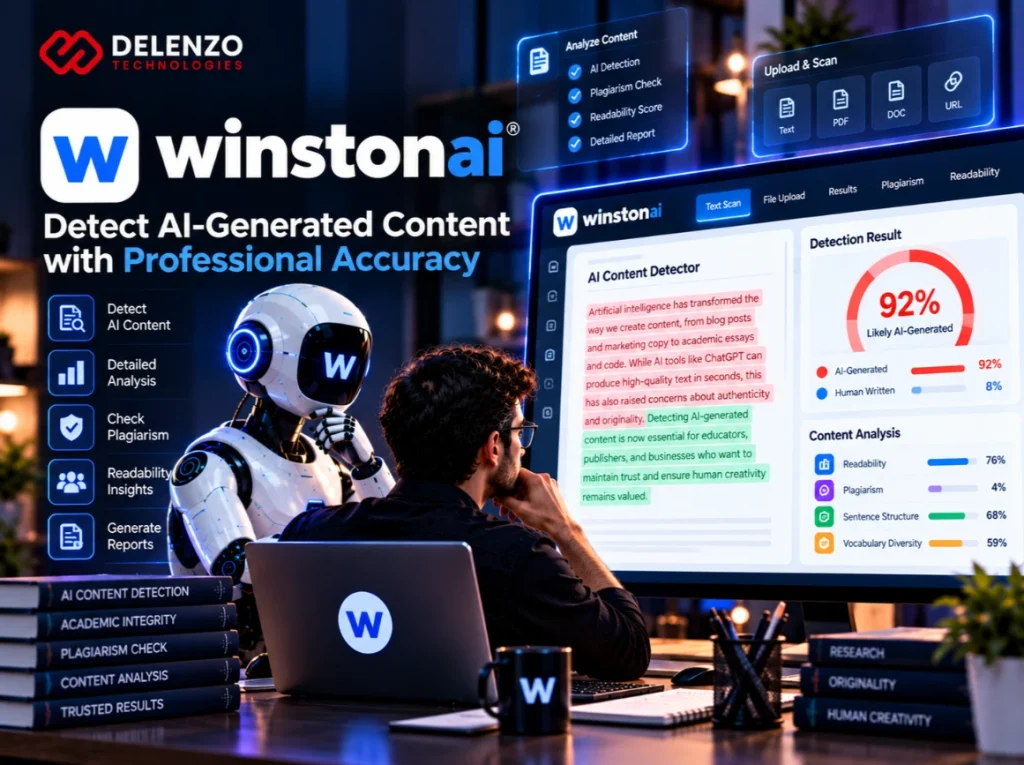
Winston AI is designed for educators, publishers, content creators, and organizations that want to verify written material.
It provides AI detection along with additional content-authenticity features.
Winston AI also publishes benchmark information about its detection models, which can help users understand how the platform evaluates performance.
Best Free ChatGPT Detector
For users who simply need a quick free ChatGPT detector, QuillBot and Scribbr are practical starting points.
Both allow users to check text without immediately purchasing an enterprise-level subscription.
However, there is a better approach than trusting one free tool.
Use multiple detectors.
For example:
If Tool A reports:
92% AI-generated
while Tool B reports:
Mostly human
and Tool C reports:
Mixed
the disagreement tells you something important.
The text cannot be confidently classified using detection software alone.
For SEO professionals evaluating a broader set of artificial intelligence platforms, our guide to the 17 Best AI SEO Tools in 2026 provides additional tools worth exploring.
ChatGPT Detector Comparison
| Tool | Best For | Free Access | Main Strength |
|---|---|---|---|
| GPTZero | Education | Yes | AI, human, and mixed classification |
| Originality.ai | Publishers | Limited | Professional editorial workflows |
| Copyleaks | Enterprise & education | Available | Frequently updated detection technology |
| QuillBot | Students & individuals | Yes | Easy and accessible |
| Scribbr | Academic writing | Yes | Student-friendly experience |
| Winston AI | Publishers & educators | Limited | Professional detection features |
There is no universally best detector.
The best option depends on what you are trying to verify and how serious the consequences of an incorrect result may be.
How to Test Popular ChatGPT Detectors Accurately
If you want to compare AI detectors properly, random testing is not enough.
A more reliable experiment should include several different content types.
Test 1: Human-Written Content
Start with content that you can confidently verify was written entirely by a human.
This test measures false positives.
A strong detector should avoid incorrectly flagging genuine human writing as AI-generated.
Test 2: 100% ChatGPT-Generated Content
Generate a fresh passage in ChatGPT and test it without making any manual edits.
Run exactly the same text through every detector.
This gives you a basic comparison of how well each platform identifies untouched AI writing.
Test 3: Human-Edited ChatGPT Content
Next, take that ChatGPT output and rewrite it meaningfully.
Do more than replace a few words.
Change:
- examples;
- sentence order;
- arguments;
- transitions;
- tone;
- and supporting details.
This test evaluates whether the detector can identify AI-assisted content after genuine human editing.
Test 4: Mixed Human + AI Content
Finally, create a document containing both human-written and AI-generated sections.
This is arguably the most realistic test.
Modern professionals increasingly use AI as an assistant rather than allowing it to create an entire piece independently.
A useful detector should therefore handle mixed authorship carefully.
Why Do ChatGPT Detectors Produce False Positives?
A false positive occurs when a detector labels human-written content as AI-generated.
This can happen because some human writing naturally resembles the characteristics associated with AI.
Examples include:
- highly structured academic writing;
- formal business language;
- predictable vocabulary;
- short factual explanations;
- standardized reports;
- simple English;
- and repetitive sentence patterns.
A technically perfect paragraph can therefore appear suspicious to a detector precisely because it is clear, consistent, and predictable.
This is why AI detection scores should never be interpreted without context.
Can Teachers Detect ChatGPT?
Teachers can sometimes recognize possible AI-assisted writing, especially when the tone or quality suddenly differs from a student’s previous work.
However, responsible detection should involve more than running an essay through one tool.
Teachers may consider:
- previous assignments;
- writing style;
- research notes;
- citations;
- document history;
- drafts;
- and whether the student can explain the argument.
AI detection software can support this process.
It should not replace professional judgment.
Can Universities Detect ChatGPT?
Universities can use AI detection systems as part of academic-integrity workflows.
Some institutions use platforms such as Turnitin, while others have their own policies and review procedures.
However, university AI policies vary significantly.
Some allow AI for brainstorming or editing.
Others restrict it during specific assignments.
Students should therefore follow their institution’s official policy rather than relying on assumptions about what is permitted.
Can Turnitin Detect ChatGPT?
Turnitin provides AI-writing detection designed to identify content that may have been generated by large language models.
Its AI Writing Report can help educators identify sections that appear consistent with AI-generated or AI-modified text.
However, Turnitin itself warns that its detection results can contain errors.
Its AI score should therefore be considered one piece of evidence rather than definitive proof of misconduct.
That is an important distinction for both teachers and students.
Can Google Detect ChatGPT Content?
This is one of the most misunderstood questions in SEO.
The better question is not:
“Can Google detect ChatGPT?”
It is:
“Does Google care whether AI helped create the content?”
Google’s published guidance focuses on content quality rather than automatically penalizing content simply because AI was involved.
Google wants content that is:
- useful;
- accurate;
- original;
- trustworthy;
- relevant;
- and created primarily for people.
Using generative AI to help research, organize, or improve content is not automatically a problem.
The risk appears when websites use automation to mass-produce low-value pages primarily to manipulate search rankings.
That means SEO teams should focus on quality rather than trying to make content appear “human enough.”
For businesses adapting to AI-driven search experiences, our guide to AI Search Optimization explains how search visibility is evolving beyond traditional rankings.
ChatGPT Detector vs Plagiarism Checker
A ChatGPT detector and a plagiarism checker are not interchangeable.
A plagiarism checker searches for similarities between submitted text and existing online or database content.
An AI detector evaluates whether writing appears statistically similar to machine-generated text.
Consider these scenarios:
A human could copy another person’s article.
That content is human-written but plagiarized.
ChatGPT could generate completely original wording.
That content is AI-generated but not plagiarized.
Professional content review may therefore require both plagiarism detection and AI detection.
Can AI-Written Content Pass a ChatGPT Detector?
Yes.
AI-written content can sometimes receive a human classification.
This is known as a false negative.
It becomes more likely when:
- AI text has been substantially edited;
- original insights are added;
- sentences are heavily rewritten;
- human and AI content are mixed;
- or a newer AI model produces patterns the detector does not recognize well.
This is why there is no responsible way to claim that every AI-generated paragraph can always be identified.
Another common misconception involves supposedly hidden identifiers inside ChatGPT content. We explore that topic further in our guide about the ChatGPT Watermark Remover.
Should You Trust AI Detector Scores?
Yes—but only as supporting evidence.
Do not treat them as absolute truth.
Instead of asking:
“What percentage did the detector show?”
ask:
- Which sections were flagged?
- Does the writing match previous work?
- Is there document history?
- Does the writer understand the topic?
- Are sources legitimate?
- Was AI assistance permitted?
- Do other detectors produce similar results?
The more important the decision, the more evidence should be considered.
A casual blog review and an academic-misconduct allegation should not use the same standard of proof.
ChatGPT Detection for Students & Academic Writing
Students should focus on proving authorship, not beating detection tools.
If you wrote an essay yourself and an AI detector incorrectly flags it, useful supporting evidence includes:
- handwritten or digital notes;
- research history;
- outlines;
- earlier drafts;
- document version history;
- citations;
- source materials.
These records provide a much stronger indication of genuine authorship than a detector percentage alone.
Students should also understand their institution’s AI policy before using generative tools for assignments.
ChatGPT Detection for Publishers & Content Teams
For publishers, the question should not simply be:
“Was AI used?”
A better editorial question is:
“Is this content worth publishing?”
High-quality editorial review should evaluate:
- factual accuracy;
- originality;
- expertise;
- experience;
- sourcing;
- usefulness;
- tone;
- and editorial consistency.
A poorly researched article written entirely by a human is still poor content.
A carefully reviewed AI-assisted article containing expert insights, accurate facts, and genuine value may be significantly more useful.
AI detection can assist editorial teams, but it should never replace quality control.
As AI platforms increasingly become discovery engines themselves, brands may also benefit from monitoring brand mentions in ChatGPT alongside conventional SEO monitoring.
ChatGPT Detection for SEO Content
SEO teams should not optimize content around AI detector scores.
A 0% AI score does not guarantee strong rankings.
Likewise, an AI-assisted article is not automatically destined to perform poorly.
What matters is whether the page genuinely answers the searcher’s question.
Before publishing AI-assisted SEO content:
- Verify factual claims.
- Add first-hand insights where possible.
- Include useful examples.
- Remove repetitive filler.
- Address search intent directly.
- Improve structure and readability.
- Cite trustworthy sources where appropriate.
- Review metadata manually.
- Ensure the page offers something competitors do not.
The goal is not to trick an AI detector.
The goal is to create content people actually want to read.
Limitations of ChatGPT Detectors
Every AI detector has limitations.
Common problems include:
- false positives;
- false negatives;
- inconsistent scores;
- difficulty identifying mixed content;
- lower performance on short text;
- differences between languages;
- challenges with edited AI writing;
- and rapidly changing AI models.
The industry also faces a fundamental technical challenge.
AI systems are becoming better at writing like humans at the same time detectors are becoming better at identifying AI.
Neither side remains static.
A tool that performs exceptionally well today may require major updates after the next generation of language models appears.
ChatGPT Detector: Final Verdict
A ChatGPT detector can be useful—but it should never be treated as unquestionable proof.
The best platforms, including GPTZero, Originality.ai, Copyleaks, QuillBot, Scribbr, and Winston AI, can identify patterns associated with AI-generated writing and highlight content that deserves closer inspection.
But no detector can perfectly determine authorship in every situation.
The most reliable approach combines:
AI detection + human review + contextual evidence + source verification + writing history
For teachers and universities, that means using detector scores as part of a broader academic review.
For publishers, it means focusing on originality, accuracy, expertise, and editorial quality.
For SEO teams, it means creating content for people rather than optimizing for a detector score.
And for businesses, the lesson is simple:
The future of content quality will not be defined by whether AI was used. It will be defined by whether the final content is accurate, valuable, original, and worth the reader’s time.
Frequently Asked Questions About ChatGPT Detectors
Not reliably. ChatGPT may recognize writing patterns that appear similar to AI-generated text, but it cannot prove that a particular passage was created by ChatGPT simply by reading it.
No. No current AI detector can guarantee perfect accuracy. False positives and false negatives are still possible, especially with short, edited, or mixed human-AI content.
Potentially, yes. Modern detectors are regularly updated to recognize content produced by newer AI models. However, accuracy depends on the detector, model version, text length, and amount of human editing.
Grammarly provides AI detection features that estimate whether text contains patterns associated with generative AI systems. Like other AI detectors, its results should be treated as indicators rather than definitive proof.
Yes, sometimes. Lightly edited AI content may still contain detectable patterns. However, extensive human rewriting, original examples, personal expertise, and structural changes can make reliable detection significantly more difficult.