

Canva reported reaching 260 million monthly users in 2025, with over 4.5 million templates available on the platform, according to Canva’s newsroom. When this many businesses draw from the same library, “good design” stops being a competitive edge.
That overlap changes what design can do for a brand. Custom graphic design vs templates is not a question with one right answer. The better choice depends on what the design needs to accomplish and what stage your business is in.
This blog post covers what each option actually delivers, where each one belongs, and a decision framework to help you choose with confidence.
What Is the Difference Between Custom Graphic Design and Templates?
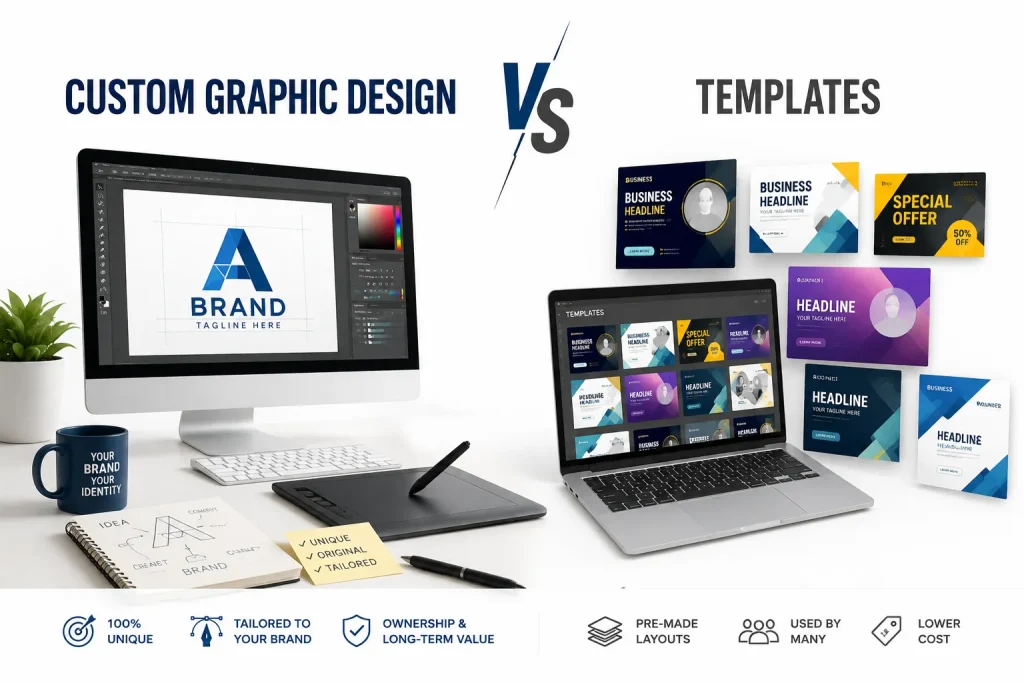
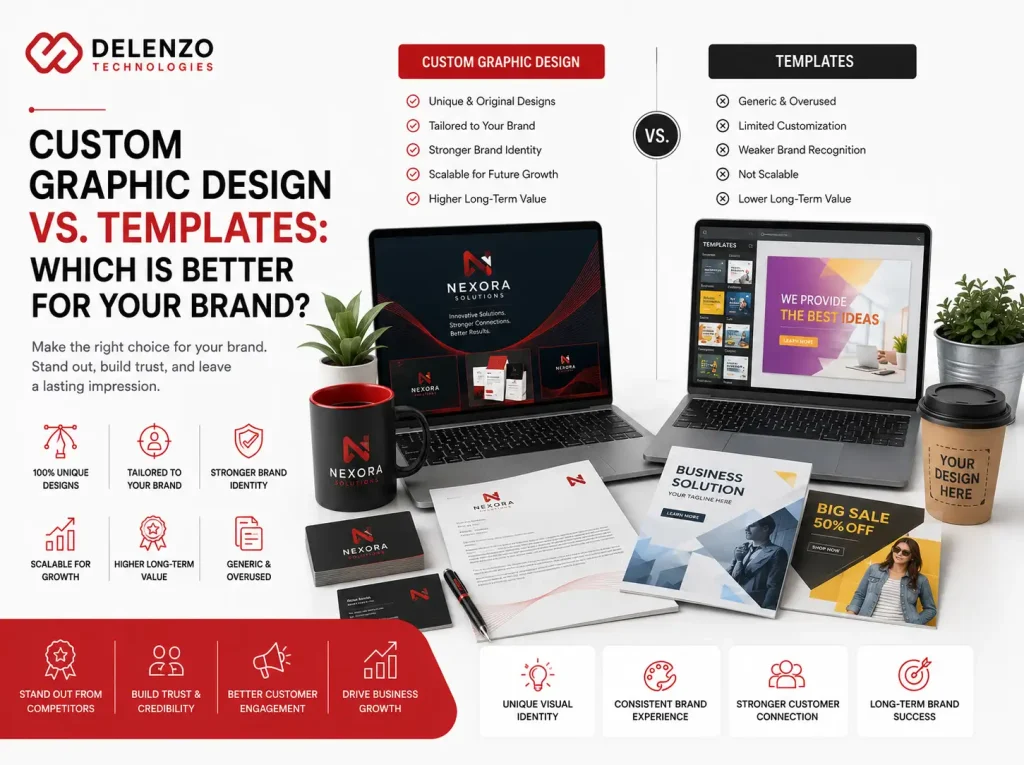
Custom design is built from scratch for one brand. Templates are pre-made layouts shared across thousands of users. That single difference shapes everything else, from cost to long-term brand value.
The custom graphic design vs templates choice comes down to ownership. One path builds an asset unique to your business, the other adapts something built for everyone else.
What Custom Graphic Design Actually Means
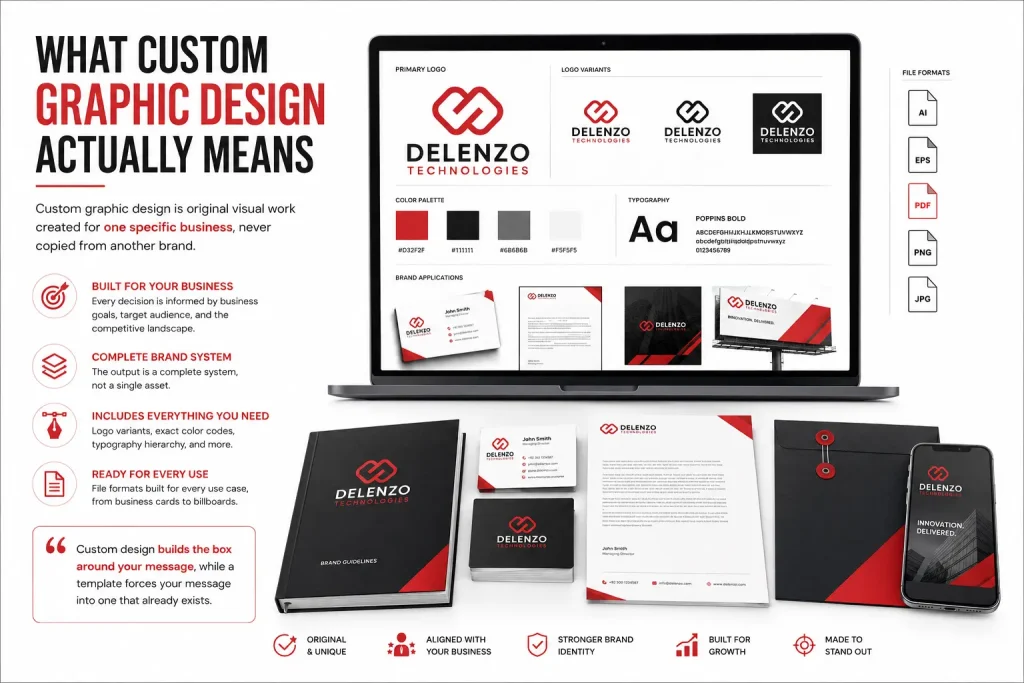
Custom graphic design is original visual work created for one specific business, never copied from another brand. Every decision is informed by business goals, target audience, and the competitive landscape. The output is a complete system, not a single asset. It includes logo variants, exact color codes, a typography hierarchy, and file formats built for every use case, from business cards to billboards.
As one branding agency put it, custom design builds the box around your message, while a template forces your message into one that already exists.
What Template-Based Design Actually Means
Template-based design uses pre-built layouts made for general use. Businesses customize them by swapping in their own text, colors, and images. Platforms like Canva, Adobe Express have made design accessible to anyone, regardless of design training. That accessibility is genuinely valuable for certain tasks.
The trade-off is built into the model. Templates are designed for everyone, which is exactly what limits them for brand identity design services and long-term brand building.
The Core Distinction That Matters for Your Brand
Custom design is made for you. Template design is made for everyone, then adapted by you afterward.
| Option | What It Is | Best For |
| Custom graphic design | Original design built for your brand | Unique, scalable visual identity |
| Template-based tools (Canva, Adobe Express) | Pre-made layouts you customize | Quick, low-budget, high-volume content |
| DIY design | Self-made, no professional input | Very small budgets, internal use |
| Crowdsourced design | Multiple designers submit concepts | Exploring options at lower cost |
| Design subscription services | Unlimited design for a flat fee | High-volume, recurring design needs |
The Case for Templates: Where They Genuinely Work
Templates earn their place when speed and budget matter more than originality. They are not the enemy of good design, just a tool with a specific job.
Speed and Cost Advantages
Templates solve real problems for real budgets, especially before a brand has a full identity system in place.
- Zero upfront cost and same-day turnaround for internal documents, social posts, and one-off flyers.
- No design skill required; a marketing coordinator can produce a usable graphic in minutes.
- Canva alone has 4.5 million templates and 260 million monthly users, making template vs custom design for brand identity overlap common.
- Libraries update constantly, adding fresh layouts weekly, though underlying structures still repeat across accounts.
Templates are a production tool, not a branding tool. They execute a look quickly but do not create one from scratch.
The Case for Custom Graphic Design: What You Actually Get
Custom graphic design earns its higher cost by creating a visual identity competitors cannot copy or duplicate. That advantage compounds over time, supporting every future campaign and market expansion. Businesses gain a strategic asset, not just a graphic, built to scale from a business card to a billboard without losing quality.
Brand Differentiation in a Crowded Market
Investing in professional graphic design services means paying for strategy, not just visuals. A custom logo typically costs $100 to $300 and takes two to four weeks, based on general market pricing. A Canva logo costs nothing and takes about 20 minutes. That gap reflects real differences in strategic depth and long-term usability.
Custom work also holds up under scrutiny. Vector files resize for a billboard or a favicon without losing sharpness, and support packaging, signage, and merchandise that templates cannot produce.
Businesses competing against shared template libraries need custom graphic design services for small business growth, not generic visual assets.
Head-to-Head Comparison: Custom Design vs. Templates
Placed side by side, the practical differences between these two paths become clear across every stage of a brand’s life.
| Aspect | Custom Graphic Design | Template-Based Design |
| Uniqueness | Built only for your brand | Shared with thousands of users |
| Brand consistency | Enforced by a design system | Depends on user discipline |
| File formats | SVG, EPS, AI, print-ready PDF | PNG, JPG, PDF only, no editables |
| Strategy | Grounded in brand strategy | Visual execution only |
| Scalability | Scales to any size, no quality loss | Limited at production scale |
| Speed | 2–4 weeks for brand foundation | Hours or less per asset |
| Upfront cost | $300–$300+, by scope | $0–$15/month platform access |
| Long-term value | Assets reused for years | No cumulative value, per piece |
| Print readiness | Fully print-ready | Needs conversion first |
| Perception | Signals expertise, investment | Signals speed or budget limits |
When to Use Templates, When to Go Custom: Decision Framework by Business Type
Your business stage decides the right approach, not personal preference. Use this framework to match your situation to a clear choice.
| Business Situation | Recommended Approach | Why |
| Testing an idea before launch | Template (Canva) | Low risk, useful for validation |
| Just launched, need a logo | Custom graphic design | Foundation every future asset builds on |
| Daily social content in-house | Custom-built templates in Canva | Template speed, custom consistency |
| Pitching investors or partners | Custom design for pitch materials | High-stakes impressions matter most |
| Expanding into packaging or events | Custom design | Needs production-spec files templates lack |
| Rebranding an established business | Custom design plus brand audit | Existing equity must be managed, not overwritten |
| Validated startup, first brand investment | Custom identity plus Canva for content | Strategy first, production speed second |
A hybrid model works well for growing businesses: invest once in a custom system, then use templates built from it for daily content.
This is where the canva vs professional graphic design debate shifts from picking a side to sequencing: strategy first, speed tools second. Skipping strategy usually means rebuilding later, at a higher cost than doing it right the first time.
A simple test: If an asset succeeds, it needs to scale across every future use. Template output rarely survives that growth without a full redo.
How Delenzo Technologies Delivers Graphic Design Services in the USA
Delenzo Technologies provides professional graphic design services built for businesses that need to look different from competitors, not identical to them. Every project starts with understanding the business and its market, not with opening a design file. Discovery comes before design, every time.
Our custom graphic design services cover the full range a growing brand needs, built as one coherent visual system for businesses across Dallas and the wider USA:
- Logo design
- Graphic design for brand identity
- Social media design
- Print design
- UI/UX design
For teams weighing affordable graphic design services vs templates, we build systems that pay for themselves through reuse and stronger brand recognition over time.
We work closely with Dallas businesses and clients across the USA, and every engagement includes clear file deliverables so teams never lose usable assets when a project wraps. Our brand identity design services also extend existing brand systems into new formats and campaigns as a business grows.
Final Thoughts
Custom graphic design vs templates comes down to one question: what role should your visual identity play right now. Templates suit speed and testing. Custom design suits growth and differentiation as a brand matures.
The right choice depends on your business stage, not a fixed rule. Ready to move beyond templates? Delenzo Technologies builds professional custom graphic design services around your business goals from day one.
Let’s Talk About Your Project
Have a project in mind? Get in touch with Delenzo Technologies and let’s discuss your requirements.
Contact UsFrequently Asked Questions
Custom graphic design is built from scratch for one specific brand. Template design uses pre-made layouts shared across thousands of users, customized with different text, colors, and images.
Yes, for brand-facing assets like logos and identity systems. Custom design creates a reusable, scalable foundation, while templates only solve short-term, low-stakes design needs.
Yes, for internal or low-stakes content. Canva templates work well for quick social posts and drafts, but shared layouts limit their fit for high-stakes brand materials.
Switch once brand consistency matters, such as after launch, before investor pitches, or when expanding into print, packaging, or new channels requiring production-spec files.
Custom design delivers editable, scalable formats like SVG, EPS, PSD and AI files, plus print-ready PDFs. Templates typically export only flattened PNG, JPG, or PDF files.